

Managing money with family can feel heavy because every choice affects the whole household. Many homes struggle to keep up with shared expenses, and this can make anyone feel worried about the future. It is a tough place to be, and I understand how discouraging it can get.
I have felt that weight too. I remember sitting at our small kitchen table with my parents as we wrote every bill on a piece of scratch paper. We did this every month, and it showed me how real money problems can be. Over time, I learned simple steps that helped us stay organized, and those steps later helped me manage my own place as an adult.
With this experience, I’m compelled to share clear ways to manage household finances and feel more in control of your money again. Let’s get started!
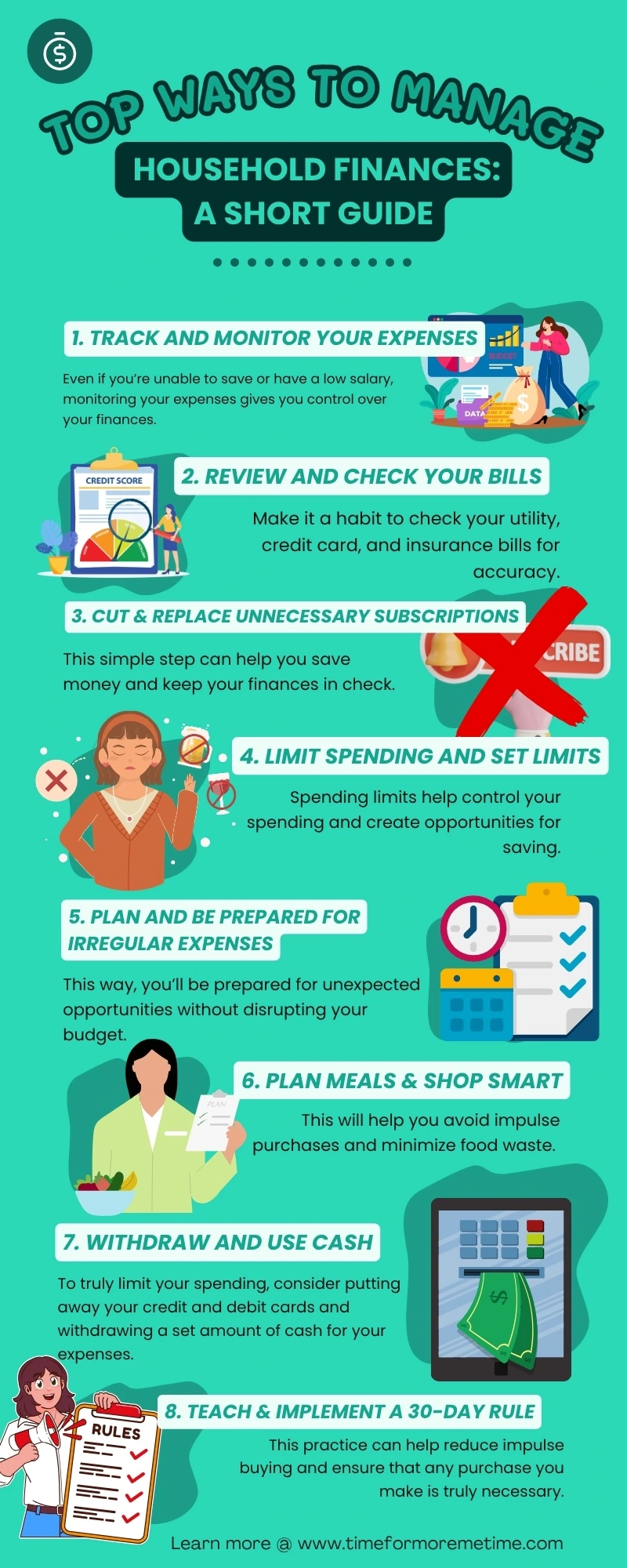
1. Track And Monitor Your Expenses
Tracking your expenses is the first step toward gaining control of your household budget. Yet only 34% of US adults tracked their spending during a recent month. Knowing where your money goes helps you spot costly habits and make choices that support your family. I used this same approach when I began fixing my finances after moving out on my own. Seeing my spending clearly helped me change my habits and stay on track.
Many households lose a large share of their income each month without even noticing. This happens when spending is not tracked at all. I saw the same thing in my own life, and it taught me how easy it is to overspend without meaning to. I know this can be stressful, especially when you are already trying your best.
Have you ever reached the end of the month and wondered where your money went? This simple habit can fix that right away. You can start with a phone app if you want something quick, or use a small notebook if you like writing things down. When you do this every day, it becomes a normal part of your routine and gives you more confidence as you handle your money.
2. Review And Check Your Bills
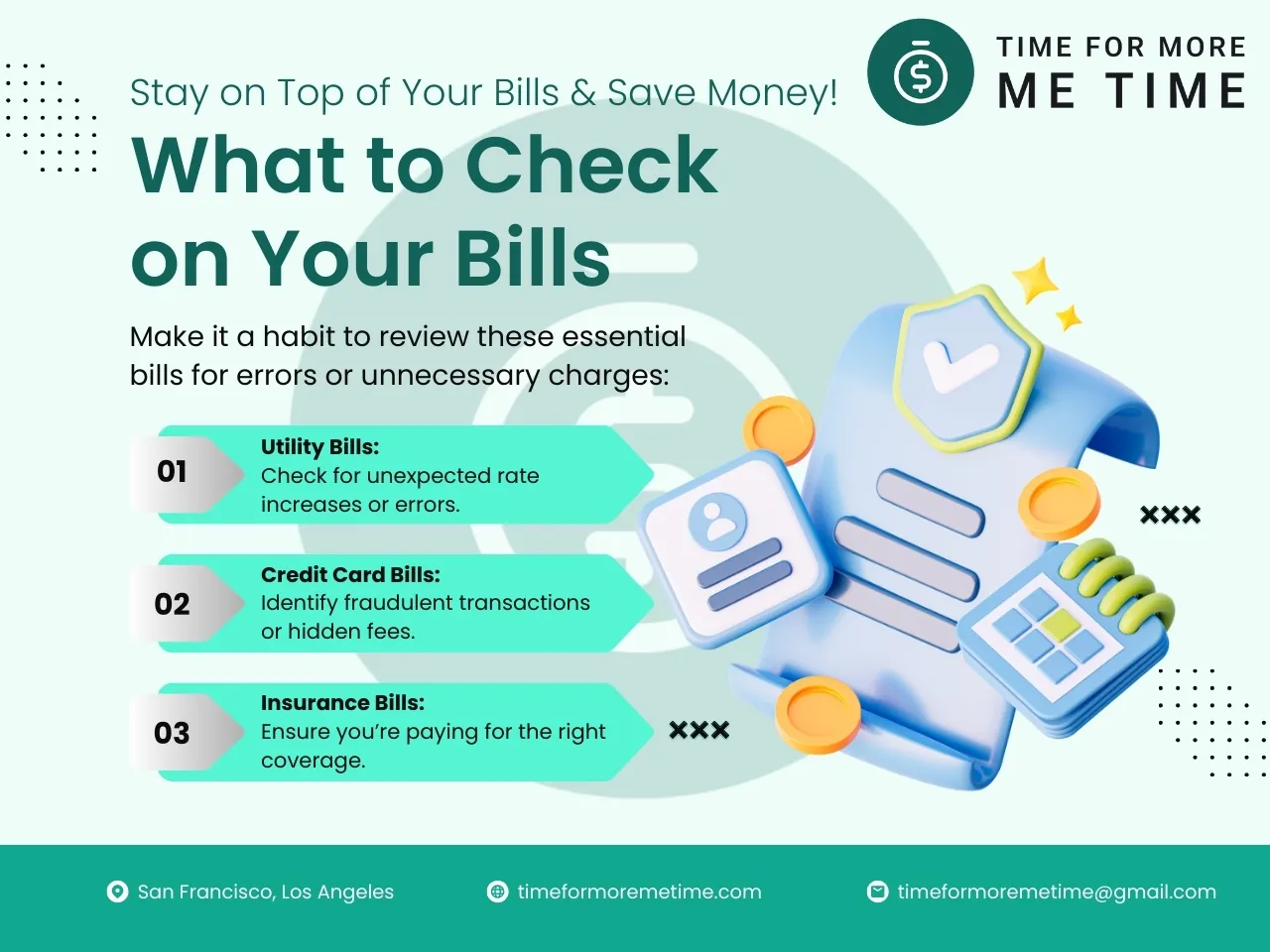
Reviewing your bills is a key part of managing your household money because bills take up a big part of your monthly budget. It may look simple, but checking them often protects you from mistakes that cost you money. I started doing this when I lived with my parents, and it helped us catch small errors before they grew into bigger problems. It also taught me to stay alert with every payment we handled.
Many families struggle to understand the charges on their utility bills. In a 2025 survey of 2,036 US adults, 58% said they did not fully understand what drives their electricity and gas costs. I noticed this myself when our power bill rose for no clear reason, and a quick call fixed it. When money is already tight, checking each charge can prevent an overlooked issue from adding more stress.
If you looked at your bill and felt unsure if the amount was right, ask your provider to explain the charges or even try to get a better rate right away. You can also use expense tracking tools. When you do this often, you protect your budget and keep more of your money for the things that matter.
3. Cut And Replace Unnecessary Subscriptions
Checking your subscriptions is important because these small charges can add up quickly without you noticing. Many families lose money each month on services they do not use at all. I learned this the hard way when I found several old games and music apps still charging me long after I stopped using them. Cleaning them up helped me keep more money in my budget.
Nearly 60% of US subscribers pay for at least one service they do not use, wasting an average of $26.79 each month. I saw this firsthand when I helped my parents review their monthly payments and found recurring charges buried in their credit card bill. These costs are easy to miss when life gets busy, but canceling unused services could keep about $321 in your pocket each year.
When you look at your statements and see a charge you didn’t expect, it’s a sign to check your subscriptions. Cancel any that you don’t use or find cheaper ones that still work for you. This easy habit helps you manage your spending and gives you extra room in your budget.
4. Limit Spending And Set Limits
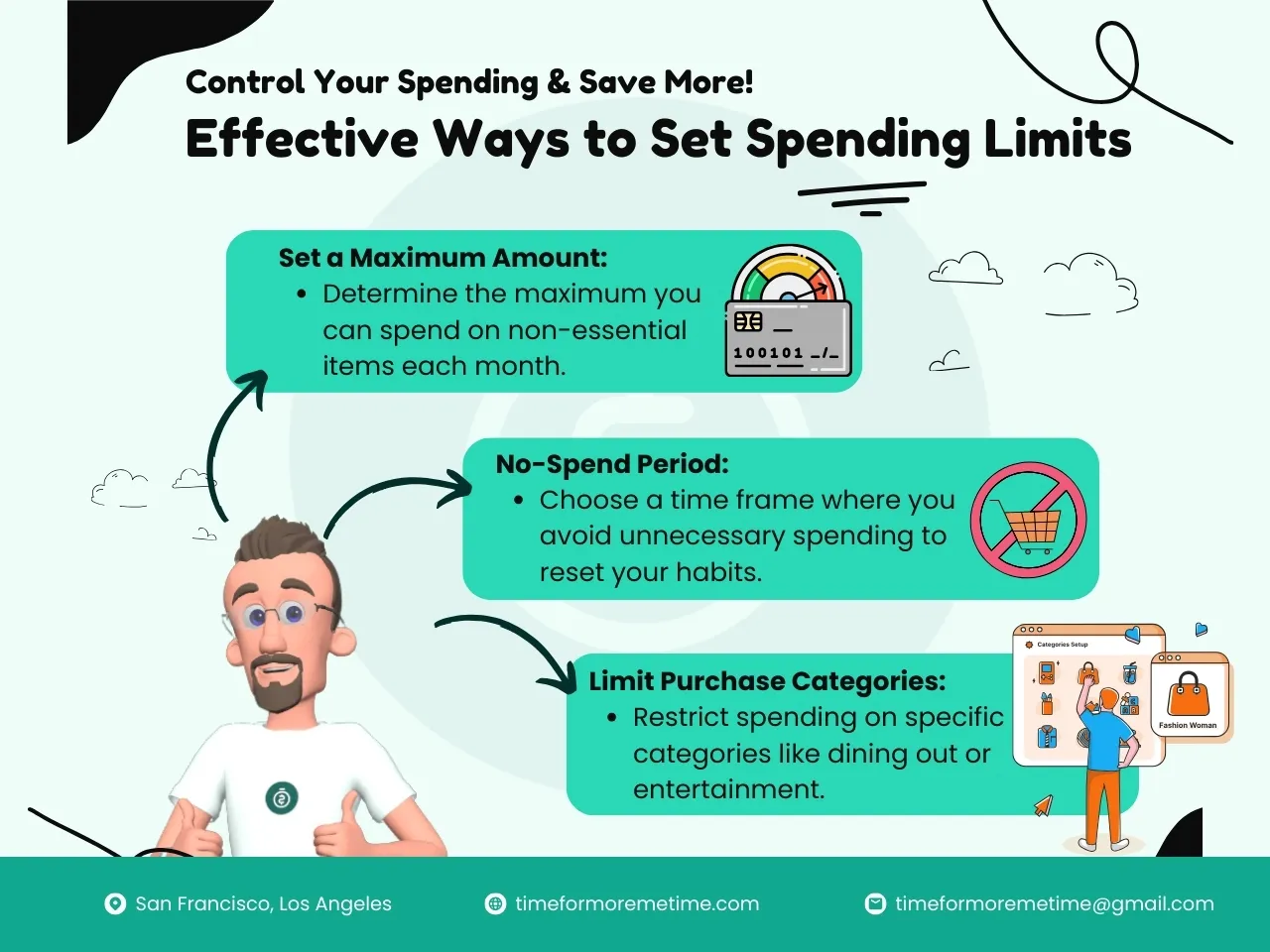
Setting spending limits is a simple way to control your money once you know where it is going. It helps you stop small leaks that slowly drain your budget. We parents established these rules early on when I was a kid. And they made sure that everyone could and would follow them. It made our spending clear and helped us avoid stress at the end of each month.
It’s easy to overspend when we shop without clear limits. Without a limit, buying stuff can leave you feeling frustrated when your money disappears before the month even ends.
To start, you can choose a monthly cap for non-essential items or try a no-spend week to reset your habits. You can also limit certain types of purchases, like takeout or entertainment. These small changes give you more control and help you reach your savings goals.
5. Plan And Be Prepared For Irregular Expenses
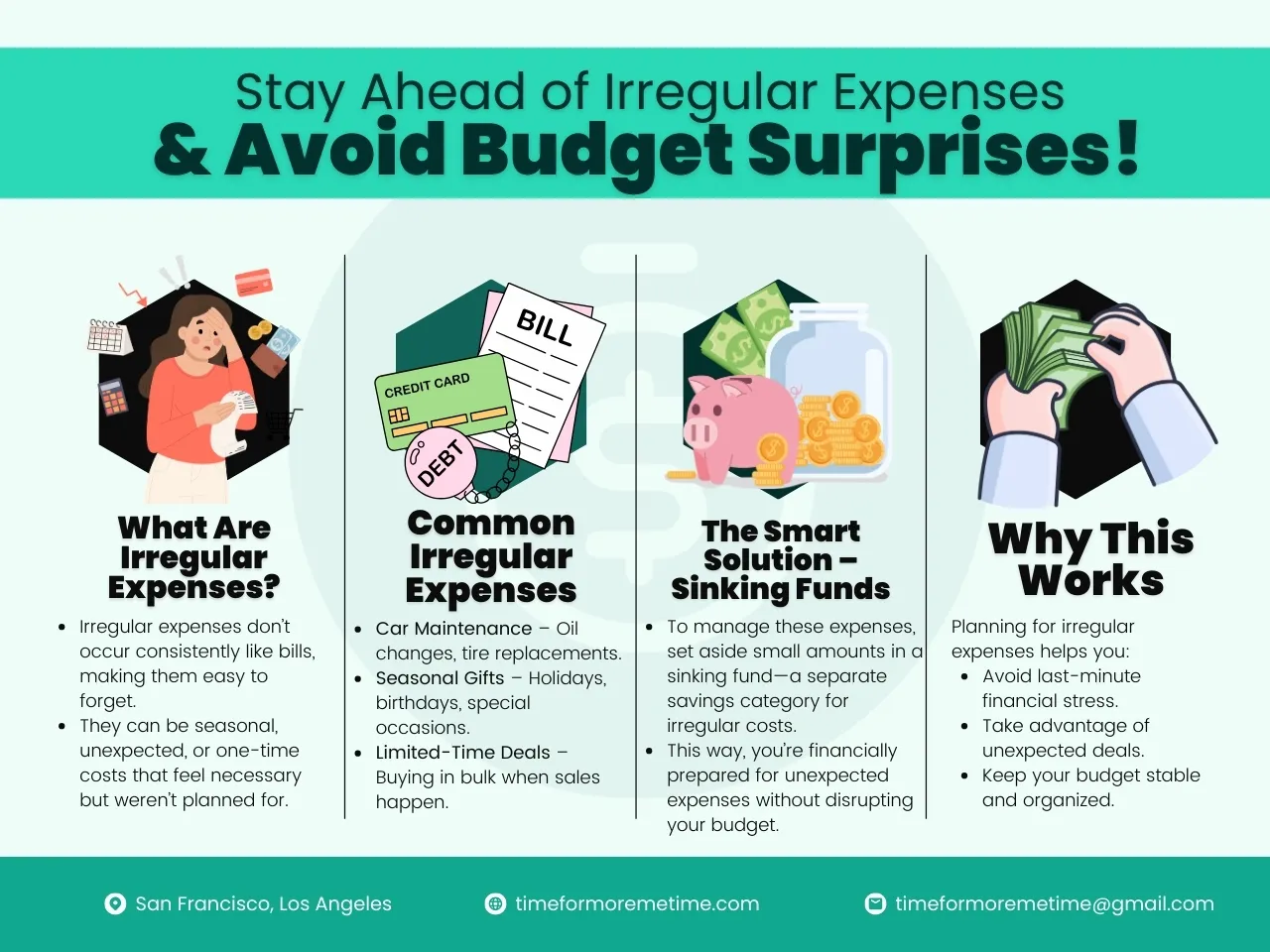
Planning for irregular or seasonal expenses helps keep your household budget stable. In 2025, 37% of US adults could not cover a $400 emergency expense entirely with cash or its equivalent. For example, if holidays, school costs, and car registration total $1,200 annually, saving $100 each month can prevent those bills from disrupting your regular budget.
Many families struggle with costs that come only a few times each year. I noticed the same thing when our car needed work or when holidays came around. These moments can feel stressful because they always seem to arrive at the wrong time. It was draining.
Setting aside a little money for irregular expenses can help a lot. You can create a small fund for things like car repairs, gifts, or even a good sale that you want to take advantage of. When you plan for these moments, they stop feeling like emergencies and become part of your normal money routine.
6. Plan Meals And Shop Smart
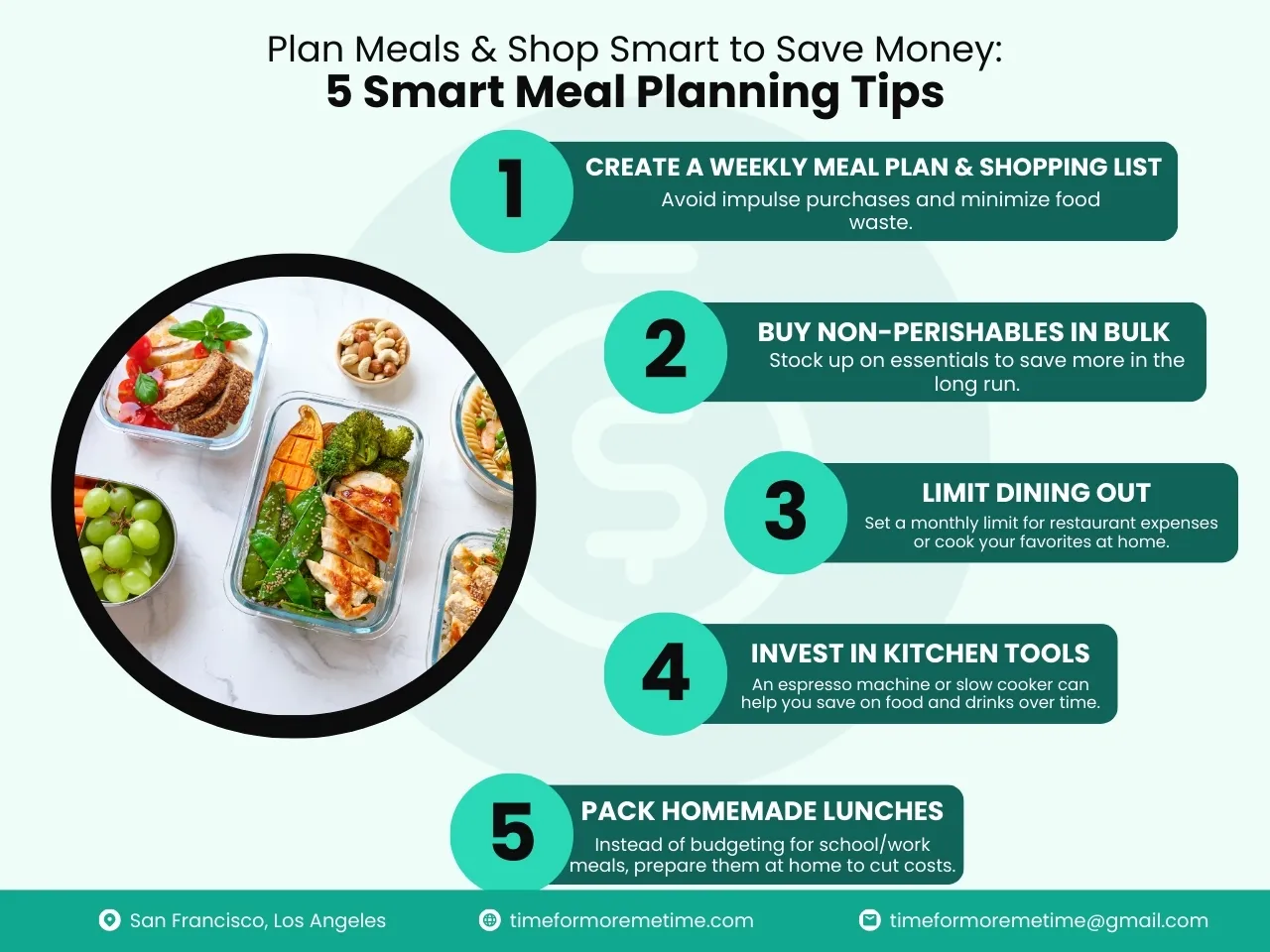
Meal planning is an easy way to cut costs because food takes up a big part of your household budget. When you plan your meals, you avoid extra spending that comes from guessing what to buy. Back then, our grocery bill was always high until we started planning our meals each week. It helped us buy only what we needed and reduced waste.
Families overspend on food because they shop without a clear plan. I saw this myself when I bought random items and ended up throwing food away. It is frustrating to see money go to waste, especially when you are trying hard to save. I understand how stressful this can feel for you.
Begin by writing a weekly menu, creating a shopping list, and setting a limit for eating out. You can even pack lunches for your kids or partner to save more money. These small choices help your food budget stretch further and make your home run more smoothly.
7. Withdraw And Use Cash
Using cash is one of the simplest ways to control your spending and stay within your budget. It gives you a clear limit because you can only use what you have in your wallet. This helped me stop buying things I did not need. It also trained me to slow down and think before spending.
Cards can make small purchases feel less noticeable until they add up. In a 2024 survey of 2,000 US adults, 52% said they were more likely to make an impulse purchase with a card, compared with 24% who said they were more likely to make an impulse purchase with cash. Another 27% said not seeing physical money made spending easier. Check your balance before making a purchase and review small card charges each week.
So, set aside a weekly amount and use only that for your daily spending. If you have kids, you can also give them a fixed cash allowance so they learn how to manage money. This simple habit builds discipline and teaches lessons that stay with you for life.
8. Teach And Implement A 30-Day Rule
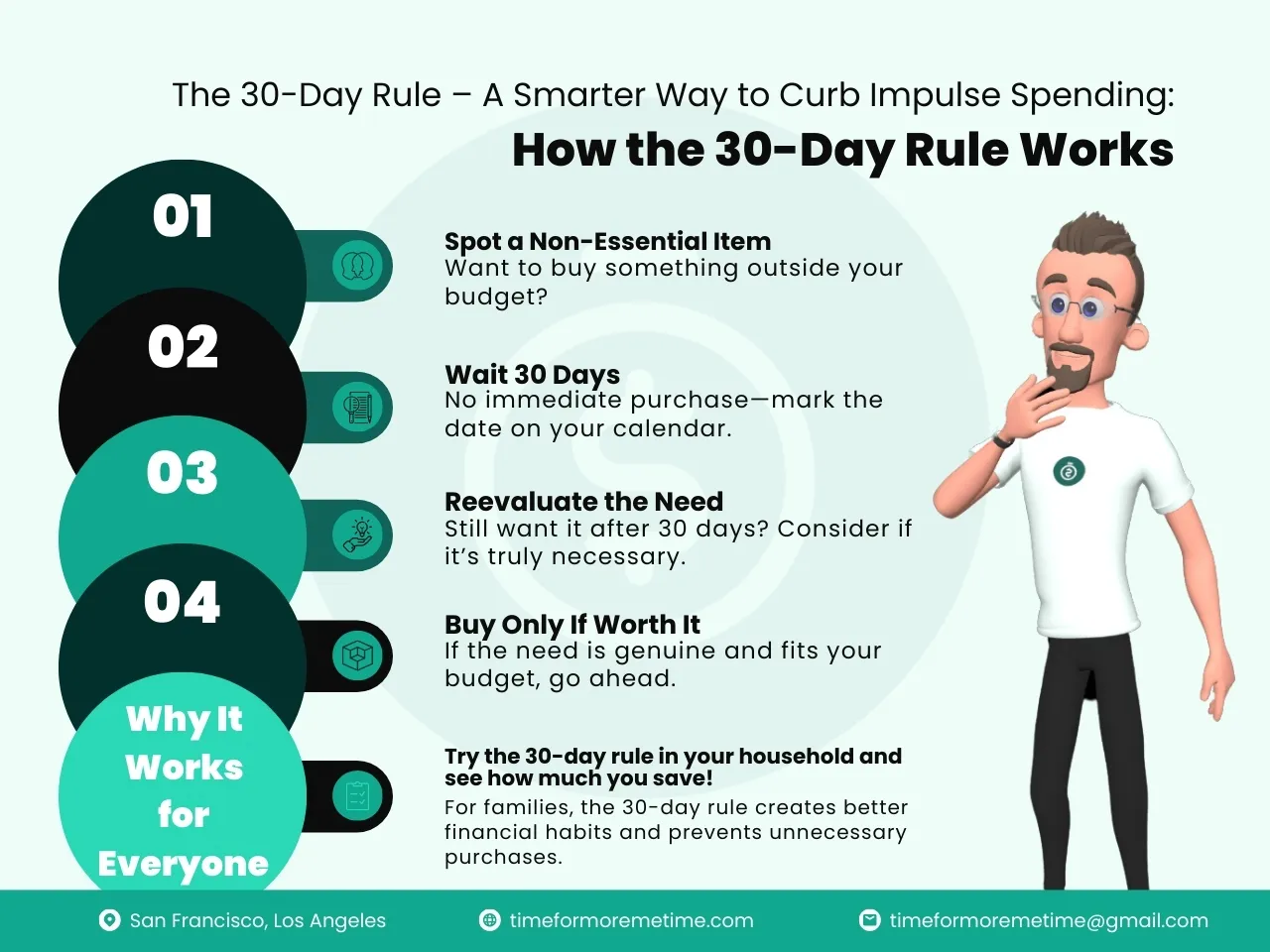
The 30-day rule is a simple way to slow down your spending and avoid buying things you do not really need. It helps you stay in control when you live with family because everyone has different wants.
When my younger relatives keep asking for new toys week after week, it can feel exhausting to keep saying no when the pressure does not stop. I know how tiring that can be for any parent.
Have you ever felt pushed to buy something right away, even when you knew it was not in the budget? The 30-day rule (and the alternative 24-hour rule) solves that problem. You can wait a full month before buying anything that is not essential and use that time to see if you still want it. Kids usually forget after a week, and adults often do too. This habit protects your money and makes every purchase feel more intentional.
9. Direct Your Budget’s Flow
When managing household finances, I focus on planning ahead to direct the flow of my budget rather than reacting to surprises. I make sure every part of my budget has a clear purpose, so nothing is confusing.
I’ve found that my finances run more smoothly for months when I follow this approach. Many families struggle because their money lacks direction.
Start by listing your needs, planning for unexpected expenses, and saving for future goals in a simple layout. This gives you structure without complicating things, and it works better for me than standard budgeting tips found online.
Conclusion
And there you have it! These are the top ways to manage your household finances and expenses. They’re quite simple, really. The challenge lies in sticking to them consistently. If you do, you’ll create a more comfortable life for your family.
By the way, don’t forget to read the other articles that can help you save more and earn extra income! Subscribe to my YouTube channel to get notified of more finance-related tips.
Sources
- Photo: Unsplash: Jakub Żerdzicki
- Bankrate. (2025). You’re debt-free, now what? How to build financial freedom that lasts. https://www.bankrate.com/personal-finance/debt-free-now-what/
- Ipsos. (2025). Most Americans report higher electricity, gas bills compared to a year ago. https://www.ipsos.com/en-us/most-americans-report-higher-electricity-gas-bills-compared-year-ago
- Self Financial. (2026). Cost of unused paid subscriptions 2026. https://www.self.inc/info/cost-of-unused-paid-subscriptions/
- Federal Reserve. (2026). Report on the economic well-being of US households in 2025. https://www.federalreserve.gov/publications/2026-economic-well-being-of-us-households-in-2025-executive-summary.htm
- Forbes. (2024). People are twice as likely to spend more money when using card than cash. https://www.forbes.com/advisor/business/software/people-twice-likely-spend-using-card-than-cash/