


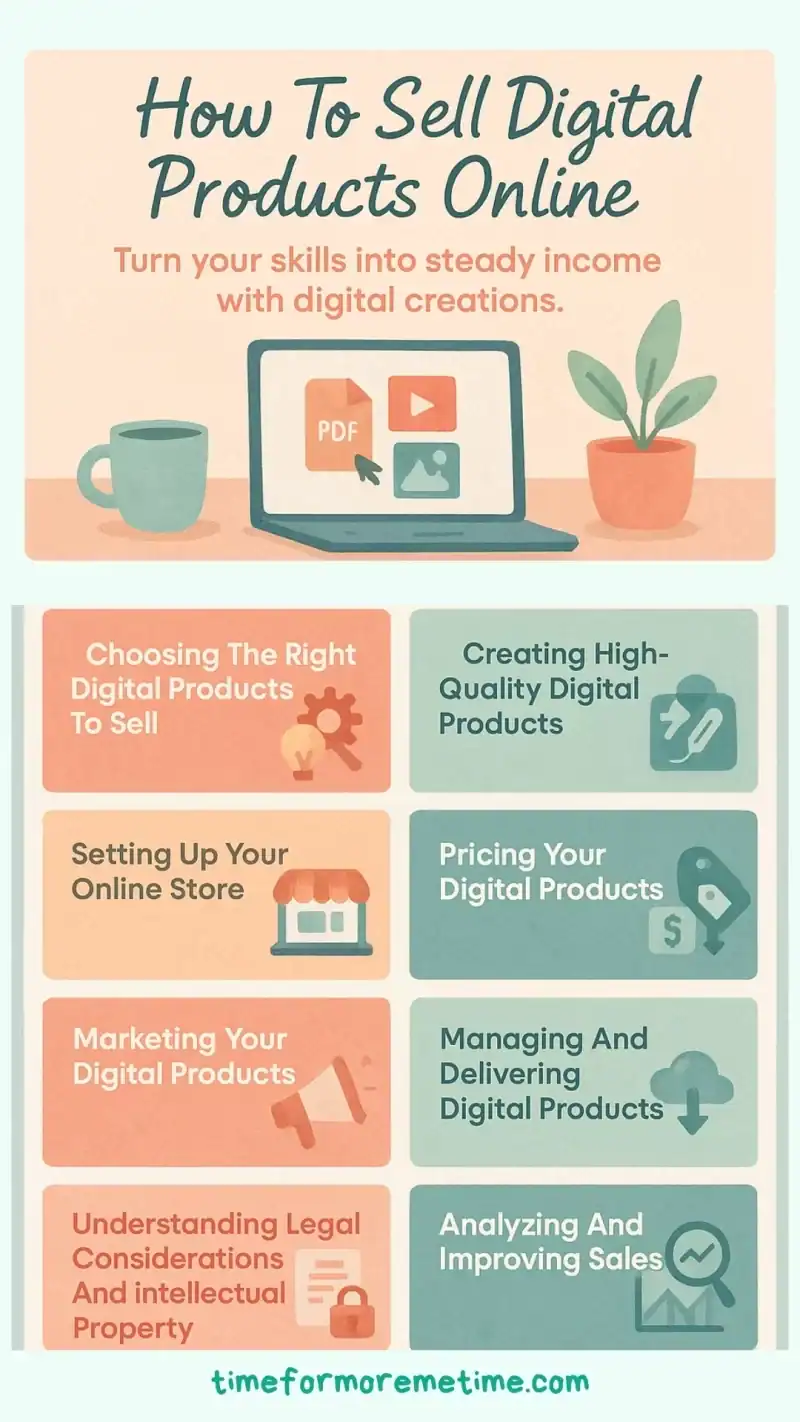
Selling digital products can be overwhelming for beginners, especially with a crowded market leading many to believe they’re too late to start. I felt the same uncertainty in 2018 while contemplating dropshipping from my San Francisco apartment, looking for ways to earn without managing physical inventory.
This motivated me to research and create my own digital-product income streams. After months of trial and error, I learned valuable lessons, even as I paused my digital sales to take on a dosimetry job. Now, I’m here to guide you confidently through the process and share what I’ve discovered. Let’s get started!
1. Choose The Right Digital Products
Choosing the right digital products is key to a successful online business. These are items you create once and sell over and over, making them perfect for beginners who want flexibility and low costs.
When I started, I chose simple digital products like templates and guides because they were quick to create and test. The digital goods market reached $124.32 billion in 2025 and could grow to $511.43 billion by 2031. For you, that growth signals more people buying downloadable products and more chances to serve a specific need.
You don’t need special skills or expensive tools—just a clear understanding of what people want. Think about the common problems people ask you to solve. This question can help you identify a great product idea. Transform your ideas into useful and easy-to-deliver items like ebooks, mini-courses, printable templates, stock photos, or simple software.
By focusing on your strengths and ensuring there’s demand for your product, you’ll be ahead of many beginners.
2. Create Quality Digital Products
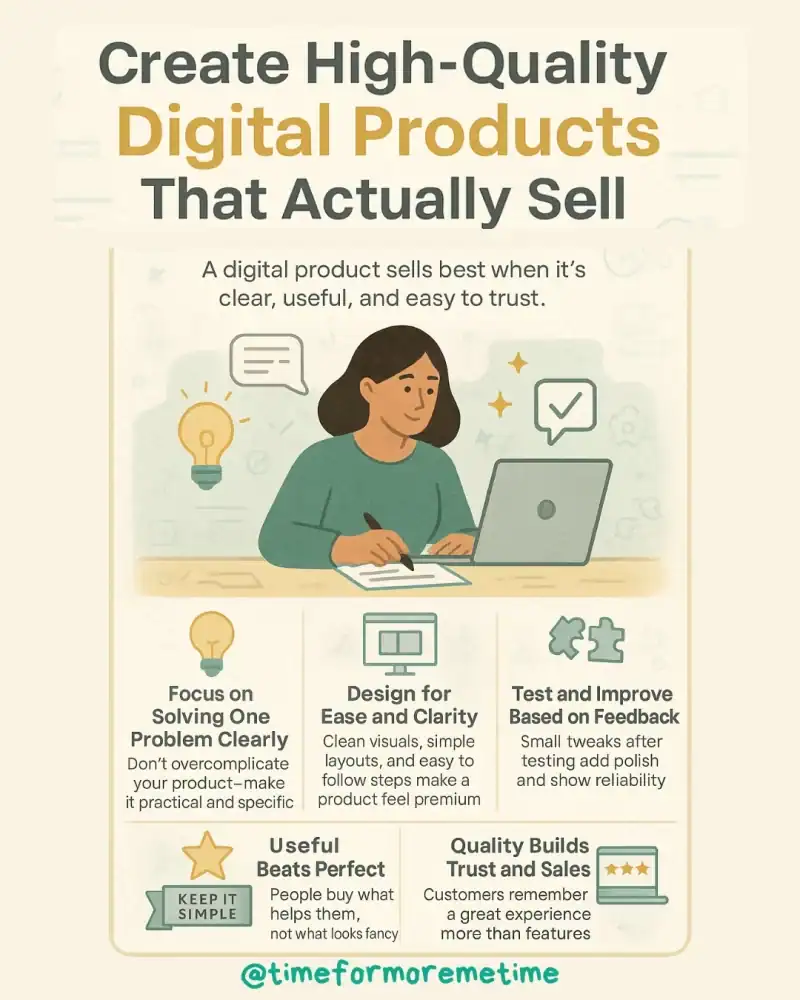
Creating high-quality digital products turns your idea into something people will buy. Quality means your product should effectively solve a real problem in a clear and enjoyable way.
When I created my first online template pack, I focused on clarity and addressing a specific need for busy freelancers, without fancy tools. You don’t need a perfect product; it just has to be useful. While quality is important, remember that you also need to earn.
Many creators find that customers prefer products that are easy to understand and immediately helpful, even if they aren’t the most advanced. People value practicality over complexity.
If you worry about your skills, remember that buyers primarily want clear, effective information. They appreciate products that feel polished and trustworthy. Confusing digital products won’t sell, so focus on simplifying complex topics, using clean visuals, and maintaining clarity in your writing. Break lessons into small steps, include real examples, test for errors, and refine based on feedback.
Quality gives your product a competitive edge and is what customers will remember long after their purchase.
3. Set Up Your Online Store
An online store gives customers a simple place to find, buy, and download your products. In a survey of 1,003 small retailers, 92% said e-commerce marketplaces helped them reach potential customers more easily.
When I launched my first store on Shopify, I was surprised by how quickly I could do it without any coding. This showed me that anyone can sell online with the right tools. It mostly requires data entry.
Most modern platforms are beginner-friendly and include features for payment processing, product delivery, and marketing. You don’t need much technical knowledge anymore. If you’re worried about picking the wrong platform, don’t stress. Many offer free trials, so you can test them out and save time later.
Start by focusing on the basics: a simple checkout, a clean design, and easy product uploads. Create an account, add your digital products, write clear descriptions, set your prices, and pick a theme that fits your branding.
Then, set up payment options and test the checkout process to ensure everything works smoothly. This may seem technical, but once you learn it, managing your online business will be much easier.
4. Price Your Digital Products
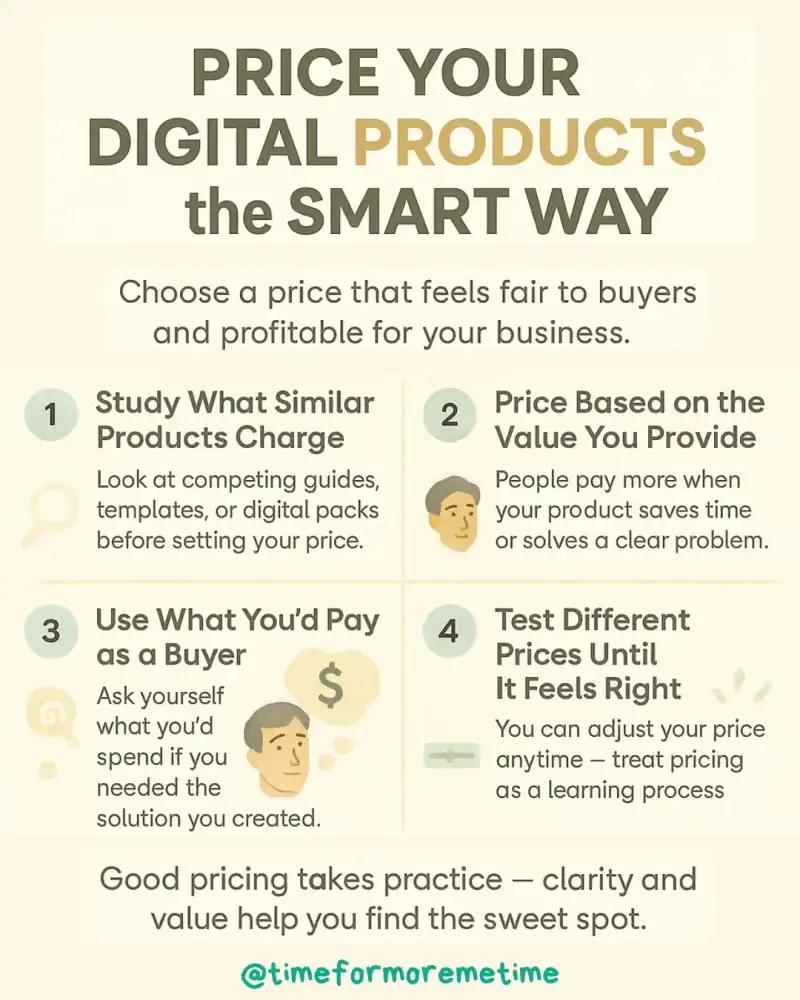
Pricing your digital products is crucial for your business. You need to find a price that feels fair to customers while still giving you a profit.
When I priced my first digital guide, I spent hours unsure if my price was too high or too low. I learned that pricing can be scary because it matters. I ended up looking at what others charged for similar products and added a few dollars on top.
After earning a bit over the past few weeks at the price I set, I discovered that customers are often willing to pay more for products that solve a clear problem or save them time. This shows that value can be more important than low cost. Don’t worry about making a mistake with your pricing. It can be adjusted later.
If you’re unsure, ask yourself: what would you pay if you were the buyer? This helps you analyze your competition and understand your audience.
After answering that question, check similar products, ask friends for their opinions, and consider the time you invested. You might also offer budget and premium versions and test different prices until you find what feels right. Pricing takes practice, but with adjustments, you’ll find the best fit for your business.
5. Market Your Digital Products
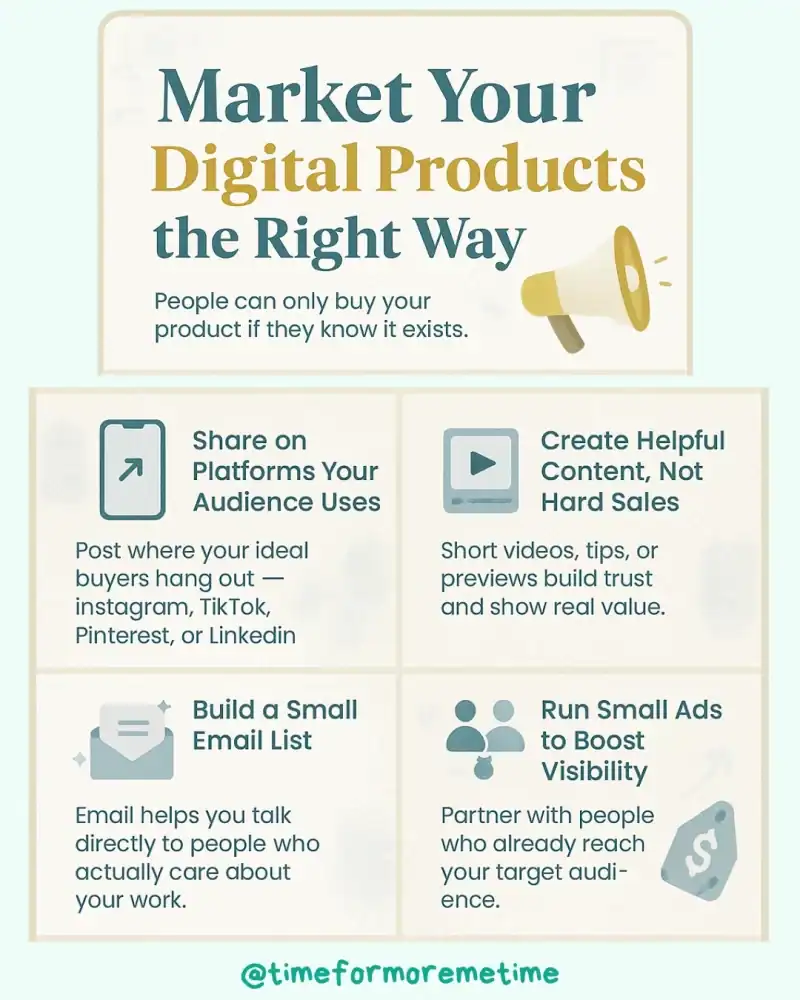
Marketing your digital products helps people find what you’ve created. Share your work where your audience spends time. At first, I was nervous about bothering people or being ignored. I soon learned there’s nothing to lose by promoting myself and my products. The more people see your product, the more confident they feel about buying it. Awareness is just as important as quality.
If you worry about being pushy, remember that today’s marketing is about sharing helpful content and not forcing sales. How will people know your product exists if you don’t talk about it?
So, start on platforms that feel comfortable for you. Use social media to post quick videos, tips, or product previews. Build a small email list for updates. Consider teaming up with influencers who connect with your audience. Create helpful blog posts or tutorials to showcase your knowledge. If possible, run small paid ads to reach more people quickly.
6. Manage Digital Products
Managing and delivering digital products means making it easy for customers to access their purchases. Unlike physical products, digital items are downloaded, not shipped.
If downloading your product is confusing, customers might leave without buying. Use a secure hosting platform to keep things running smoothly. Good options are Amazon S3, Google Drive, and Dropbox. Automate delivery with tools like Gumroad or SendOwl so buyers get their downloads right away.
Provide clear instructions and offer good customer support. Keeping your products updated helps reduce complaints. Track analytics to see which products sell best, and use a secure payment system to protect everyone.
Always offer help when needed and regularly update your products. When customers have a smooth experience, they trust your store and are more likely to buy again. This builds a steady income and helps your online business grow.
7. Understand Legal Considerations
Protecting your digital products requires understanding the applicable laws and intellectual property rights. This includes copyrights, trademarks, and licensing. I learned that if I didn’t protect my work, others could copy it. After registering my copyright and setting usage rules, I felt much safer.
Many online sellers lose money when their products are used without permission. This happens often on the internet, like with YouTube.
Your digital product receives copyright protection once you create it, but timely registration gives you stronger options if someone copies it. Courts may award $750 to $30,000 per infringed work, with damages reaching $150,000 for willful copying.
Federal trademark registration can strengthen nationwide protection for your brand name and logo, while clear licenses tell customers whether they may use, share, or resell your files. Follow applicable privacy and tax rules to keep your store legal and professional.
needed, consult a lawyer. Taking these legal steps early avoids costly problems and helps your business run smoothly. It also boosts your customers’ confidence in your professionalism and reliability.
8. Analyze And Improve Sales
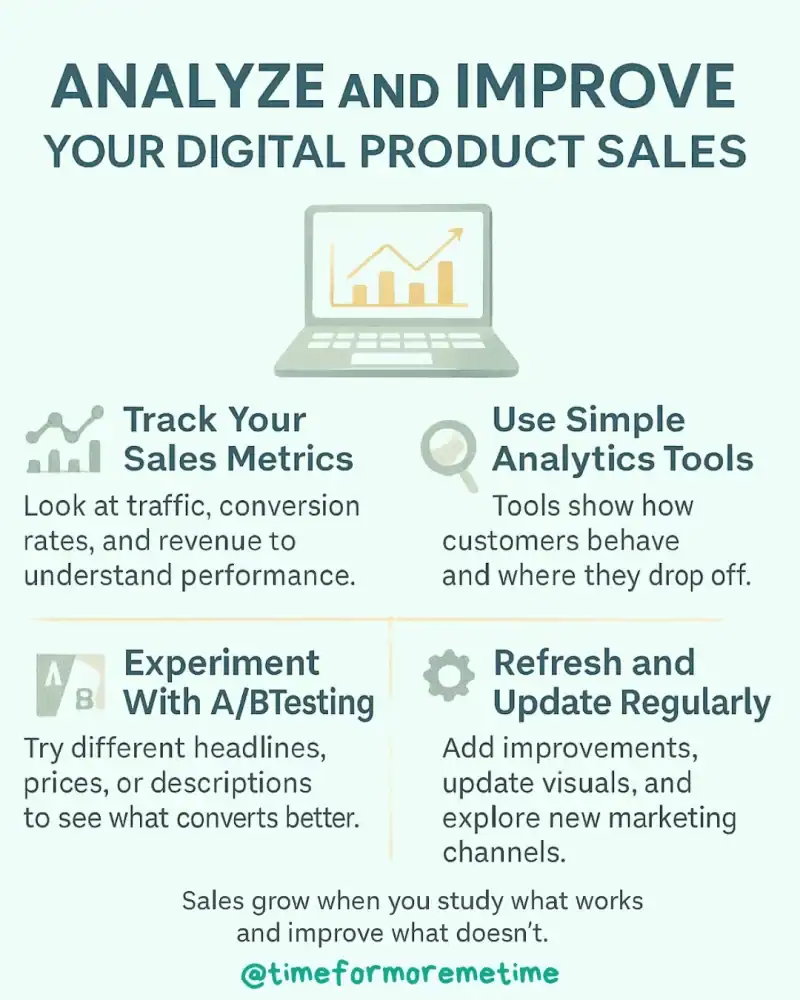
Analyzing sales involves checking how well your digital products are performing and finding ways to improve. This includes looking at traffic, conversion rates, and customer feedback. At first, I had very few sales and felt discouraged, but tracking my metrics showed me what worked and what didn’t.
Use analytics tools to boost sales. They can help you understand customer behavior. Reviewing feedback reveals what customers enjoy and what frustrates them. A/B testing different headlines, prices, and calls to action can optimize conversions. Experimenting with marketing channels and updating your product based on trends keeps your offerings competitive.
Try new marketing platforms and refresh your product regularly. Make small, data-driven improvements, and your sales will grow over time. Happy customers lead to better sales.
Conclusion
And that’s it! Selling digital products is a great way to make money online, though it can require a lot of effort. Once you understand the steps to sell them, you can build a sustainable and even automated business. It’s an exciting journey!
If you found this helpful, please subscribe to my blog, follow me on social media, and check out my YouTube channel. See you there!
Sources
- Mordor Intelligence. (2026). Digital goods market size and share analysis. https://www.mordorintelligence.com/industry-reports/digital-goods-market
- TechNet. (2025). Recent poll reveals the importance of e-commerce marketplaces to small business. https://www.technet.org/media/icymi-recent-poll-reveals-the-importance-of-e-commerce-marketplaces-to-small-business/
- US Copyright Office. (2025). Copyright registration toolkit. https://www.copyright.gov/intellectual-property-toolkits/copyright-registration-toolkit.pdf