


Lately, more people are realizing that poor sleep is sabotaging their energy and focus. Studies show that irregular sleep patterns can raise stress levels and lower productivity by nearly 40%. If you’re waking up tired or staying up too late scrolling, don’t worry. You can restore balance with small, realistic changes.
During my first year working night shifts as a dosimetrist, my schedule was chaotic. Some nights I crashed at 2 a.m., other times, I stayed up till sunrise. It took me months to find a rhythm that worked, but once I did, my mood, focus, and overall health improved dramatically.
So, let me share some of the practical ways I reset my internal clock. Doing these can let you wake up refreshed, fall asleep faster, and stay consistent even if your schedule keeps changing. Let’s get started!
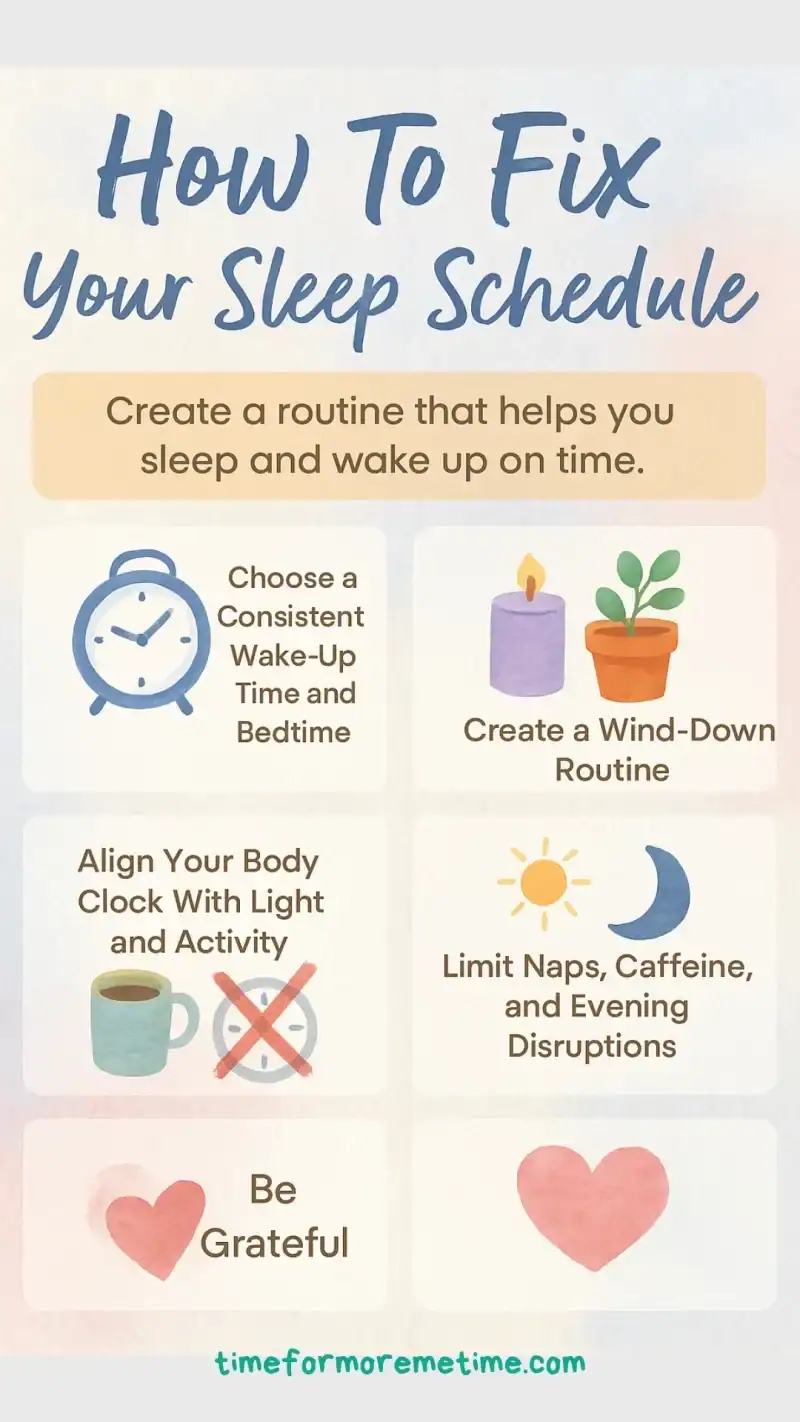
1. Choose A Consistent Wake-Up Time And Bedtime
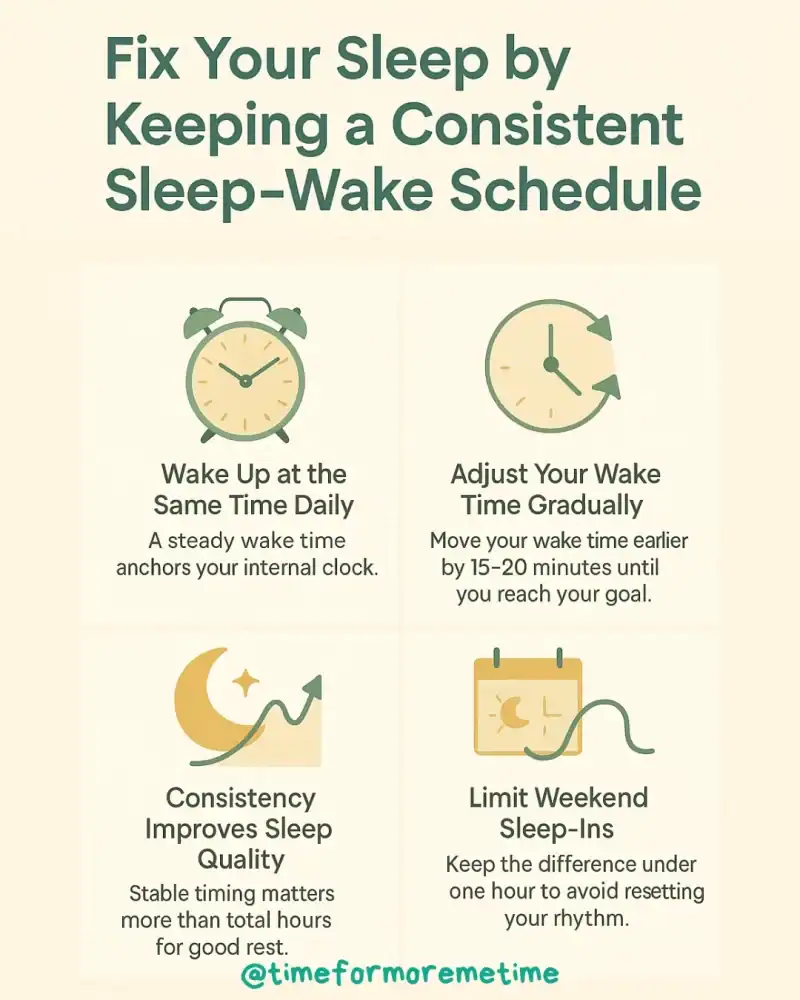
A fixed schedule is the foundation of better sleep. Many people wonder whether it’s more important to focus on bedtime or wake-up time. Waking up at the same hour each day trains your body to set its rhythm naturally. When I started waking up 20 minutes earlier each morning until I reached my target time, I noticed the difference within two weeks.
Research shows that consistency is the strongest predictor of high-quality sleep. Even if you fall short of eight hours, waking up at the same time keeps your energy levels steady throughout the day. If you feel tempted to sleep in on weekends, keep the difference under an hour to maintain balance.
Keeping your sleep window steady helps your body expect rest at the right time. Over time, that rhythm turns into a habit that supports focus, calm, and better mornings.
2. Create A Wind-Down Routine
A relaxing bedtime routine tells your body it’s time to slow down. Many people stay alert late into the night because they go straight from screens or work to bed without giving their minds time to unwind. I started setting aside twenty minutes each evening to dim the lights, stretch, and read a few pages of a book. Within a week, I was falling asleep faster and waking up clearer.
Experts agree that a consistent nighttime ritual helps your body recognize patterns of rest. Simple cues, such as soft lighting or quiet activities, can trigger relaxation. The best morning routine for success starts the night before. When your body rests deeply, you wake up more focused and ready to perform.
Start small and commit to one calming habit you can repeat daily. Journaling, deep breathing, or a short shower can all work. Over time, your body connects that habit to rest, and sleep begins to arrive naturally.
3. Align Your Body Clock With Light And Activity
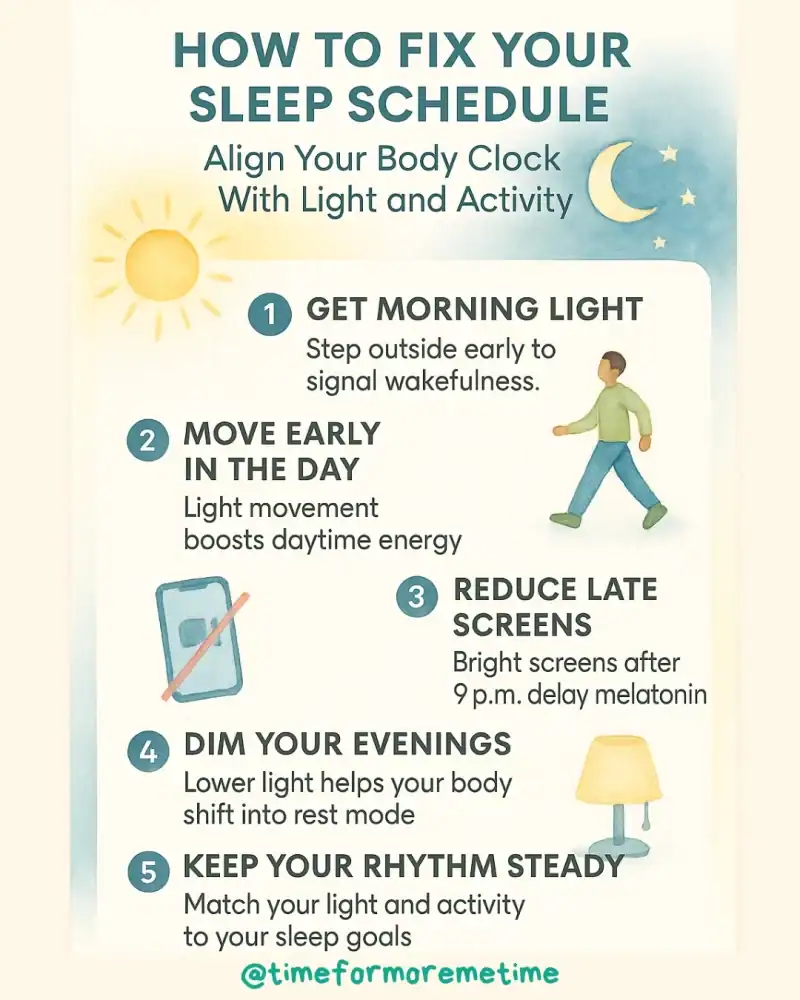
Your sleep improves when your light and movement match your natural rhythm. Morning light signals alertness, and evening darkness signals rest. I started stepping outside for five minutes before coffee, and my nights got calmer within days.
Studies show bright screens after 9 p.m. can delay melatonin and make sleep harder. That means morning sunlight and fewer late screens help you fall asleep faster and wake up clearer. If your nights feel restless, this simple shift can ease the strain.
Do you notice a slump when evenings stay bright and busy? Step outside soon after waking, then dim the lights about an hour before bed. Light sets the rhythm, and your environment keeps it steady.
4. Limit Naps, Caffeine, And Evening Disruptions
Better sleep starts long before bedtime. Long naps, heavy dinners, or late caffeine can disrupt your body’s rhythm and delay rest. I learned this after cutting afternoon coffee and shortening naps. Now? My focus improved, and I could work faster the next day.
Caffeine can stay in your system for up to eight hours, even if you don’t feel it. Late-night snacks or alcohol might make you sleepy at first, but they often lead to restless sleep later. These small choices add up and affect how alert you feel in the morning.
Take a moment to review your habits. Keep naps under 30 minutes and finish them before 3 p.m. Staying active during the day may also help your body feel ready to rest at night. A steady rhythm strengthens your energy, clarifies your mind, and makes your work more efficient.
5. Be Grateful
Many sleep tips focus on single things like routine, light, or what you eat and drink. However, I believe sleeping well involves more than just turning off the lights.
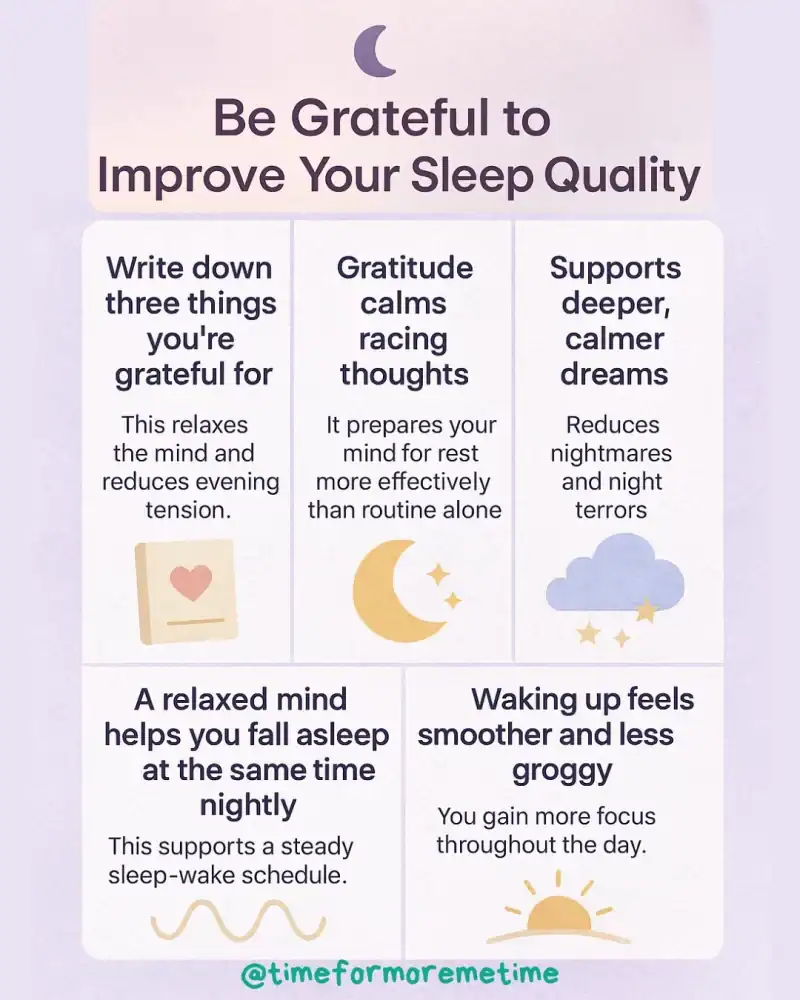
After trying different advice, I found three things that work well for me: dimming the lights, sticking to a regular bedtime, and spending a few minutes writing down three things I’m grateful for. I especially focus on this last point. I’ve tried the first two before, and they didn’t completely help—they weren’t enough in my case.
Anyway, writing down what I’m grateful for helps me relax both mentally and physically. It also addresses the mental side of sleep, which many tips often ignore. Personally, I find that I have better dreams now—no more nightmares or night terrors like before.
Since I started this routine, I’ve enjoyed deeper sleep and calmer mornings. This simple ritual really works for me. I’ve also noticed that I got through my morning routines smoother, leading to less grogginess and better focus during the day.
Conclusion
When you fix your sleep schedule, you can restore balance and focus to your days. It helps you wake up energized, think clearly, and stay consistent with your goals.
To receive more helpful sleep and productivity tips, subscribe to our blog, follow us on social media, and visit our YouTube channel for engaging, easy-to-follow guides.
Source
- Photo: Pexels: Ron Lach