


There comes a time when every day feels like you’ve worked nonstop but didn’t make real progress. It has just become the norm for all of us. Many people struggle with busy schedules that leave little room for meaningful work. Research shows that those who plan their days with intention and focus on fewer, high-impact tasks achieve better results and feel less overwhelmed.
I’ve been there too. When I first started balancing multiple side gigs, I believed success meant saying yes to everything. That mindset led to burnout and unfinished work. Over time, I learned that real efficiency comes from managing focus, energy, and intention instead of cramming more into the day.
I will walk you through practical strategies so you can finally feel in control of your time. Let’s get started!
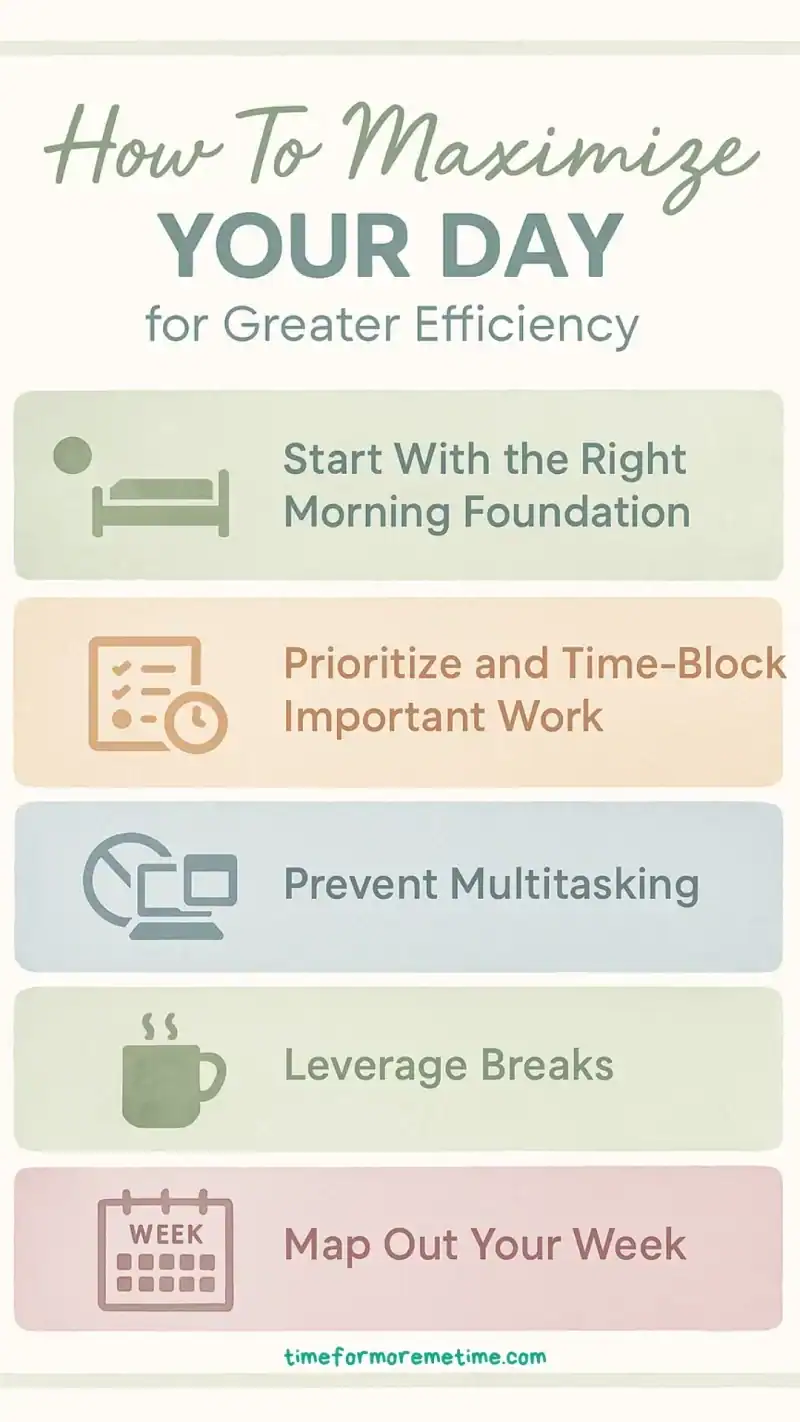
1. Start With The Right Morning Foundation
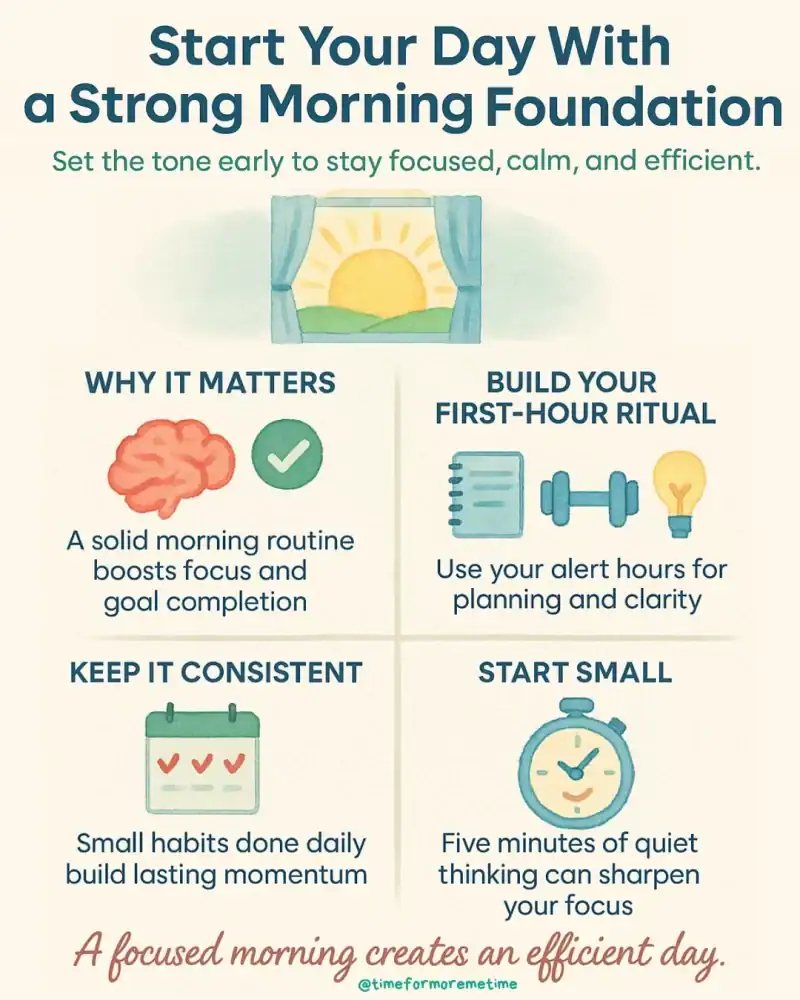
Your morning routine shapes your focus for the rest of the day. Many experts reveal that people who dedicate their first hour to planning, movement, or reflection achieve goals more consistently. That’s why I began waking up 30 minutes earlier to plan my priorities, and by mid-morning, I was already ahead.
The best time to be productive is when you feel most alert, but what matters most is consistency. Create small rituals like stretching, journaling, or reading something motivational to set the tone for your day. A calm, purposeful morning keeps you in control before distractions start to pull you away.
Many successful professionals use this golden hour for deep thinking or planning. Even five minutes of quiet reflection can sharpen your focus. Start small, then build from there. Focus on progress, not perfection. That steady momentum will carry you through the rest of your day.
2. Prioritize And Time-Block Important Work
Efficiency begins with knowing where to focus your effort. Instead of trying to do everything, concentrate on the tasks that create genuine progress and long-term results. I use the Eisenhower Matrix to sort my priorities, separating what deserves my focus today from what can wait until tomorrow. This method keeps me clear-headed and helps me end the day feeling productive rather than rushed.
If you want to work faster without burning out, start by aligning your toughest tasks with your highest-energy hours. Schedule your most demanding work during those times and guard them like important meetings. With time-blocking, you can focus, prevent overwhelm, and complete deep work without distractions. Besides, many productivity experts note that professionals who dedicate set hours for focused work accomplish more in less time.
Avoid filling your schedule with busywork that feels productive but doesn’t move you closer to your goals. Group similar tasks such as emails, messages, or quick calls to maintain flow and mental clarity. When you take control of your schedule instead of reacting to it, you’ll find your day runs smoother and more efficient.
3. Prevent Multitasking
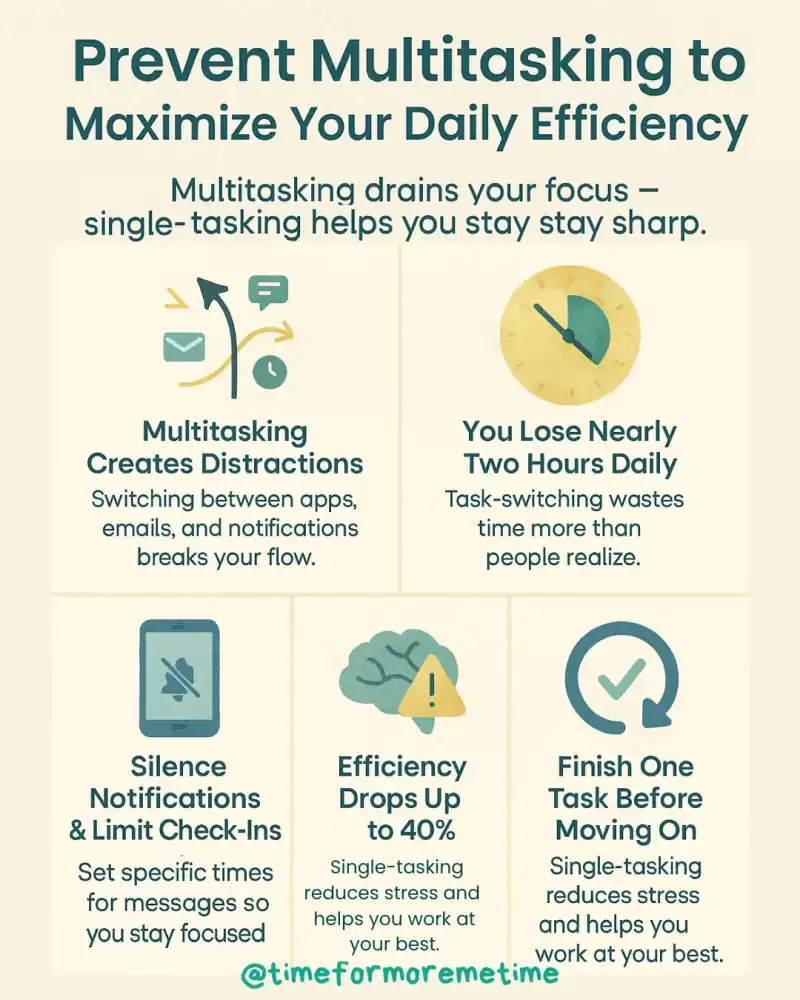
Distraction is the biggest thief of time, and multitasking is the main culprit in creating distractions. Most people lose nearly two hours a day switching between emails, notifications, and apps. I noticed my own productivity jump once I silenced my phone and checked messages only at set times.
Is multitasking really that bad? Research says yes. Multitasking can lower efficiency by up to 40% and increase errors. The fix is simple: focus on one task at a time, and finish it before moving on. This single-tasking approach helps your brain stay sharp and reduces stress throughout the day.
4. Leverage Breaks
Efficiency comes from sustainable pacing and not constant motion. Short breaks give your brain time to recharge and prevent mental fatigue. I often use the Pomodoro Technique, which involves 25 minutes of focused work followed by a five-minute pause. This keep my energy steady throughout the day.
If you’ve ever wondered how often to take breaks to stay productive, many experts recommend doing so about once every hour or so. Use that time to stretch, step away from your screen, or take a short walk. Physical movement increases blood flow, boosts focus, and helps creativity return when energy dips in the afternoon. It’s one of the habits I often include in my morning routine since both set the tone for sustained focus.
5. Map Out Your Week
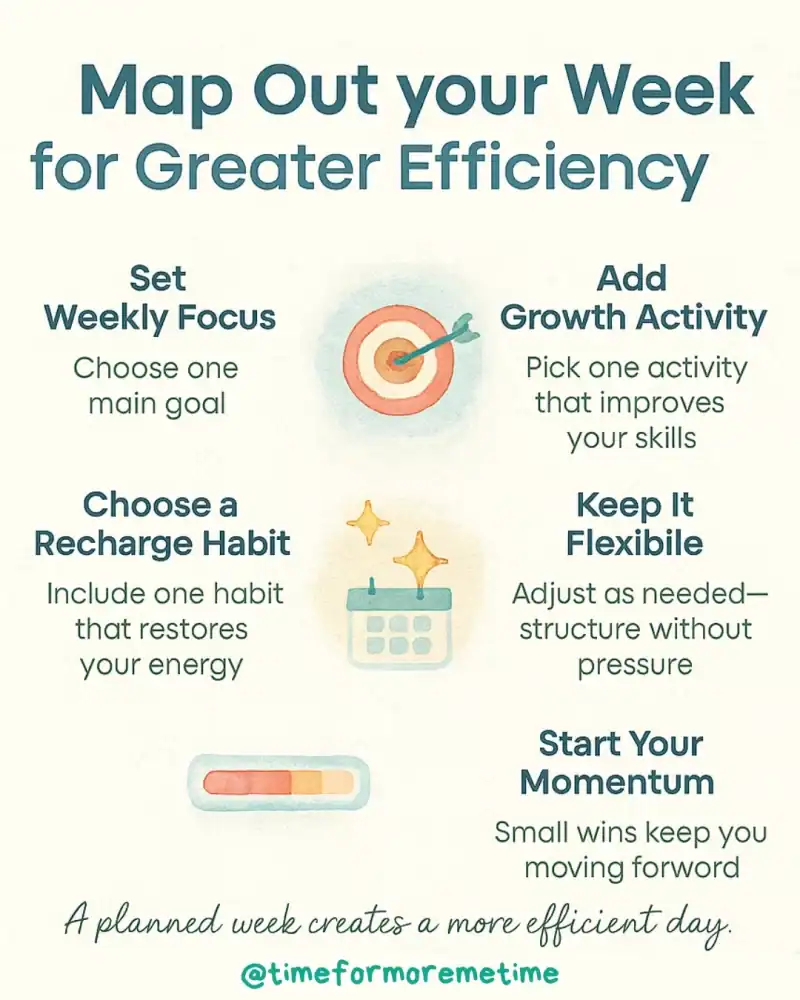
To boost my efficiency, I start by planning my week every Sunday evening. I focus on three key areas: one major goal, one growth activity, and one recharge habit. This approach often shifts my regular morning routine by introducing new elements.
I learned this technique from doctors at the hospital where I work. They find that it helps them feel less overwhelmed. While I’m not sure if it has scientific backing, it works for both them and me. I believe it relates to the benefits of having structure, which can calm the mind and reduce anxiety. Plus, the visual aspect of the map keeps me aware of my progress, helping me avoid feeling lost in daily busyness.
I prefer this method because it combines structure with flexibility. It isn’t just another rigid planner; it serves as a reminder to act with purpose. When you track your momentum weekly, productivity becomes a natural habit rather than a constant struggle.
Conclusion
To maximize your day, focus on directing your time and energy toward what truly matters most. When your actions reflect your priorities, productivity feels lighter and success becomes more sustainable.
For more practical strategies to boost your daily efficiency, subscribe to our blog, follow us on social media, and visit our YouTube channel for engaging videos on time management and personal growth.
Source
- Photo: Pexels: Arina Krasnikova