


Trying to keep up with everything can feel impossible when your mind is full and your to-do list keeps growing. In this post, I’ll introduce you to the Getting Things Done (GTD) method—a simple way to organize your thoughts, manage your tasks, and finally feel in control of your day. Let’s get started!
What Is GTD
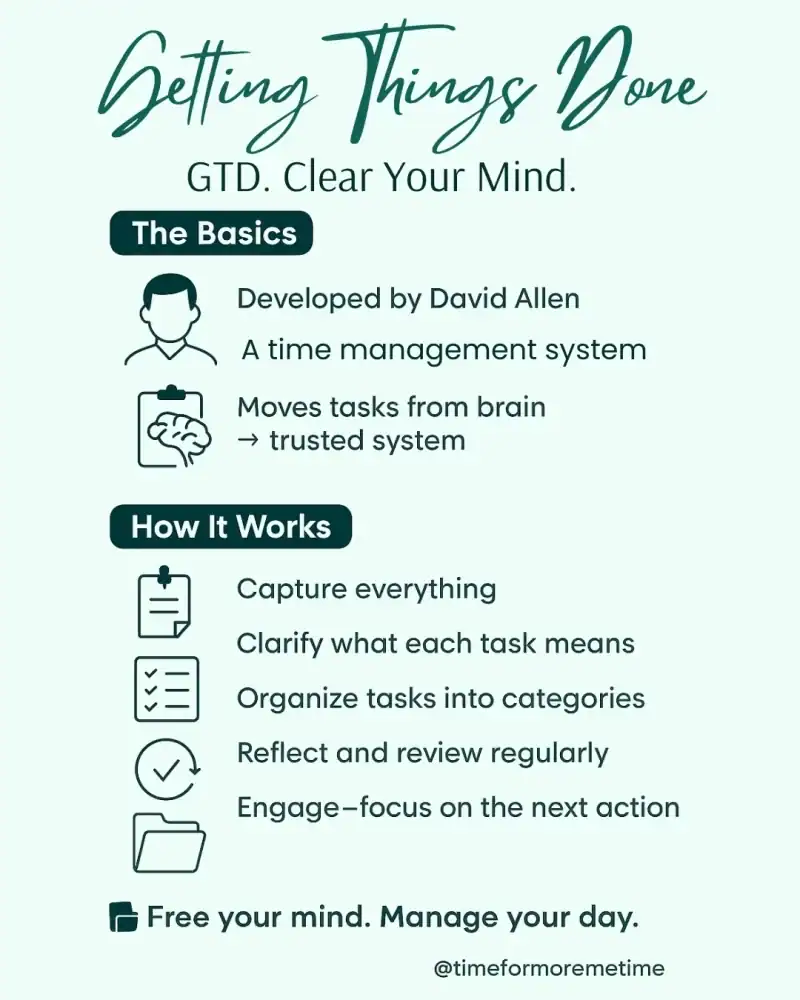
The GTD method, developed by productivity expert David Allen, is a time management system designed to enhance organization and reduce stress. Its core principle is to transfer all tasks and ideas from your mind into a reliable system, allowing you to focus on what matters most.
GTD can be applied to various areas, from work projects to household chores, but its foundation remains the same. The main goal is to achieve mental clarity and control over your responsibilities by organizing tasks and reminders effectively. This approach helps you manage your commitments better, reducing feelings of overwhelm and boosting productivity.
Most of the time, GTD is often used in conjunction with other time-saving and productivity methods, such as the two-minute rule. This rule suggests that if a task can be completed in two minutes or less, you should do it immediately rather than defer it. By integrating GTD with such techniques, you can further streamline your workflow and enhance your efficiency.
Why Should You Use GTD
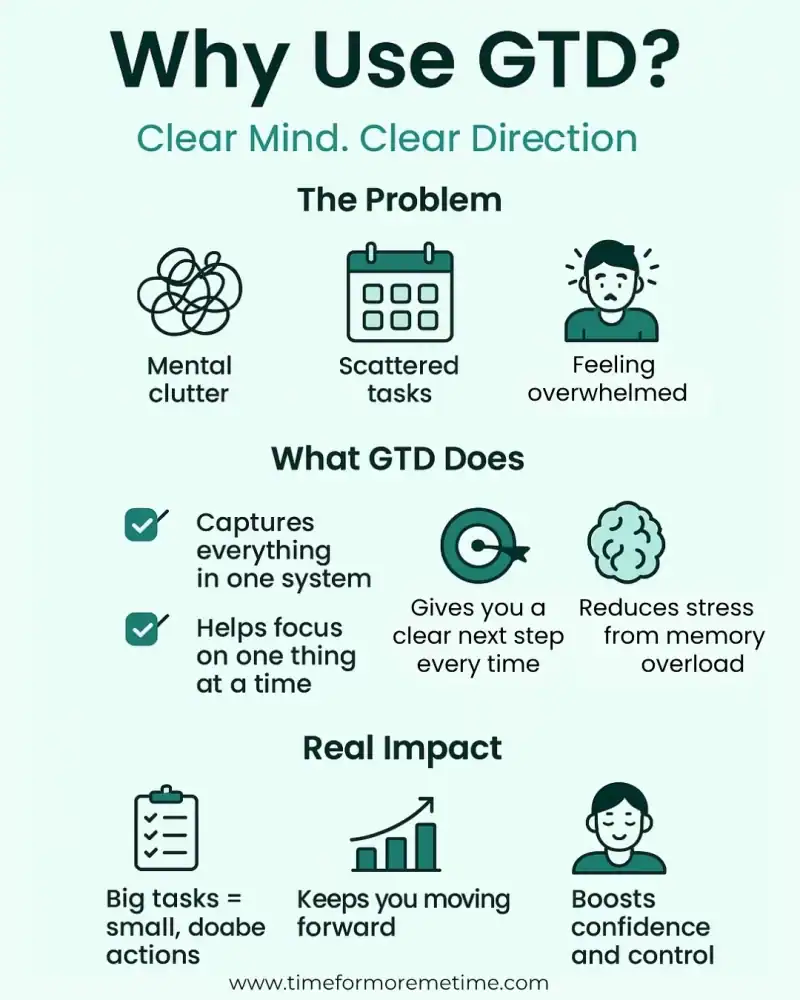
The GTD technique helps you clear mental clutter and take control of everything you need to do, making it perfect for anyone feeling overwhelmed or unsure where to start. It teaches you to capture tasks, ideas, and commitments in one trusted system instead of relying on memory or scattered notes.
This method can boost your productivity by helping you focus on one thing at a time without the stress of forgetting something important. By knowing exactly what needs your attention—and what doesn’t—you’ll waste less time figuring out what to do next.
Even big tasks feel more manageable with GTD. For example, if you need to plan an event, the system helps you break it into small, doable actions like attending a book event, sending invites, or buying supplies. This structure keeps you moving forward with confidence, one step at a time.
How To Start Using GTD
You can begin implementing the GTD method by establishing a straightforward system to capture, sort, and act on your tasks. Follow these steps to get started:
- Capture: Write down everything that comes to mind—tasks, ideas, reminders—using a notebook, app, or any tool that works for you. The goal is to get everything out of your head.
- Clarify: Review each item on your list and determine what action is required. Ask yourself: Is it actionable? If yes, decide the next step. If not, consider whether to discard it, file it for reference, or add it to a someday/maybe list.
- Organize: Sort your actionable tasks into categories based on context (e.g., work, home, errands) or projects. Use folders, lists, or digital tools to keep everything organized.
- Reflect: Regularly review your lists and projects. Set aside time weekly to go through your tasks, update your lists, and ensure everything is current.
- Engage: Choose tasks from your organized lists based on priority and context. Focus on completing one task at a time, allowing you to maintain clarity and productivity.
Many people enhance their task lists by using contextual tags, such as @home or @phone. These tags help you easily remember and organize tasks based on where or how they need to be completed. Additionally, some individuals create sections like “Waiting For” to track tasks that have been delegated and are pending results.
As you implement these steps, remember to start small, stay consistent, and allow your system to evolve over time.
What Are The Drawbacks Of The GTD Technique
Using the GTD method can help you save time and become more efficient, but it’s important to note that this is not guaranteed. While GTD is a powerful tool, it does come with some drawbacks, particularly for beginners. Here are the main challenges to be aware of:
- Overcomplicating the System: GTD has multiple steps like capture, clarify, organize, reflect, and engage. For some, this can feel overwhelming or too rigid, leading to confusion rather than clarity.
- Focusing Too Much on Organization: It’s easy to spend more time organizing lists and folders than actually completing tasks. The goal is action—not just planning.
- Falling Behind on Reviews: GTD relies heavily on weekly reviews. Skipping these can cause your system to break down, leaving tasks lost or outdated.
- Collecting Without Doing: Writing everything down is helpful, but without consistent follow-through, lists just grow longer and less useful.
- Tool Overload: Some users spend too much time trying different apps or tools to “perfect” their GTD setup instead of using a simple, reliable system that works for them.
While the GTD method is effective, it’s essential to understand that it is not infallible. One common mistake is becoming overly confident in the system’s capabilities. Keep in mind that tasks won’t disappear on their own, and time won’t magically extend for you. You are ultimately responsible for completing your tasks, and the system is there to help you be more productive and efficient.
The success of GTD also relies on how well you manage your tasks. Being aware of these limitations can help you stay focused on what truly matters—actually getting things done rather than just writing them down. To make the most of the method, keep it simple, stay consistent, and adapt it to fit your real-life routine.
Conclusion
GTD is a practical and powerful time management method that helps you stay organized, reduce stress, and focus on what matters most. By capturing and sorting your tasks into a clear system, you can free your mind, avoid overwhelm, and make steady progress every day.
To receive more helpful tips, subscribe to our blog, follow us on social media, and visit our YouTube channel for engaging and insightful videos.
Sources
- Photos: Unsplash: Carl Heyerdahl