


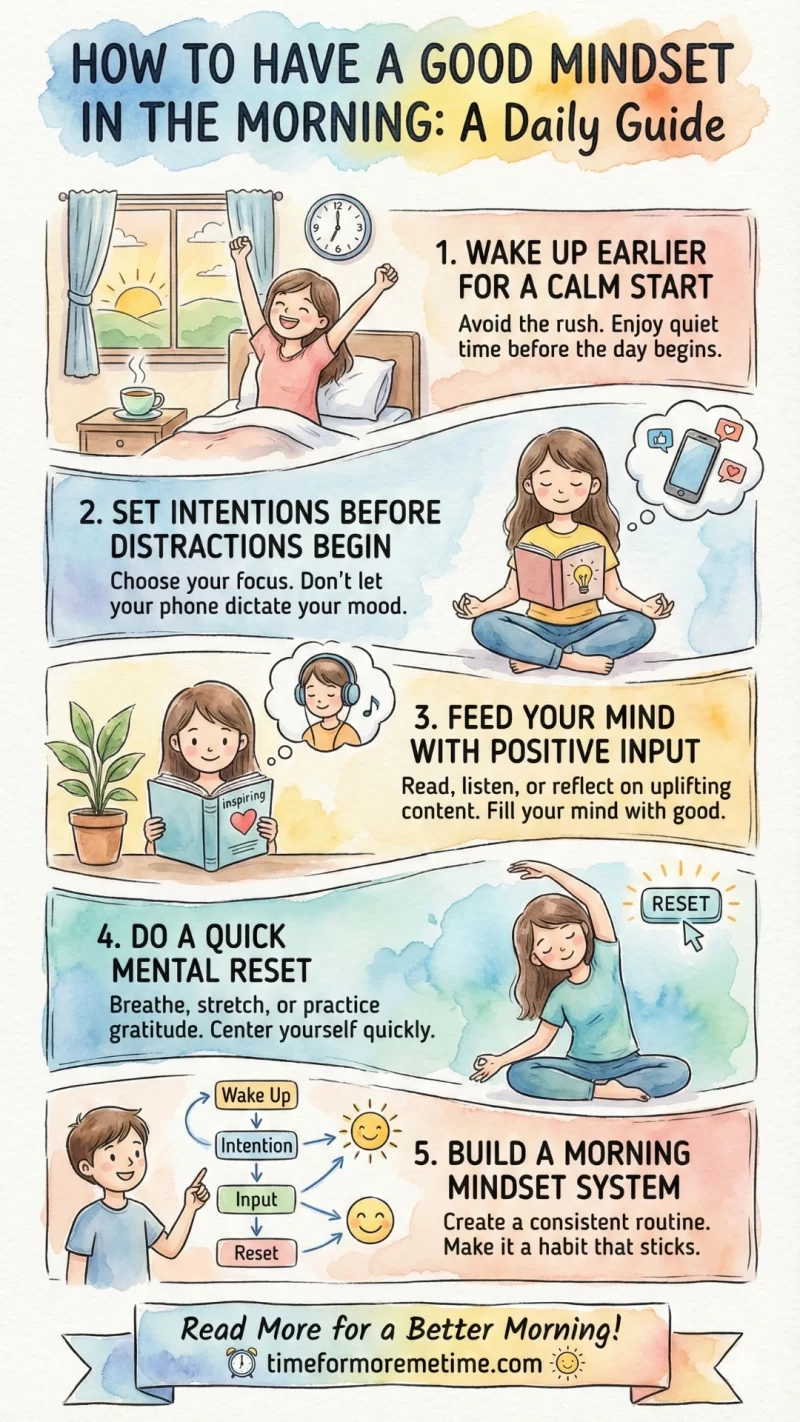
Many mornings start in a rush instead of a reset. Studies show that nearly half of adults wake up feeling tired or stressed before the day even begins. That pressure often leads to reactive thinking instead of calm focus, making it harder to stay motivated or productive.
I’ve felt that same fatigue when early commutes and long work hours left me drained before sunrise. My mornings used to begin with chaos—coffee in one hand, phone in the other—until I started using small, steady habits to create balance. Those simple changes transformed how I approached every day.
And I want to share all of those to you in this guide. Let’s get started!
1. Wake Up Earlier For A Calm Start
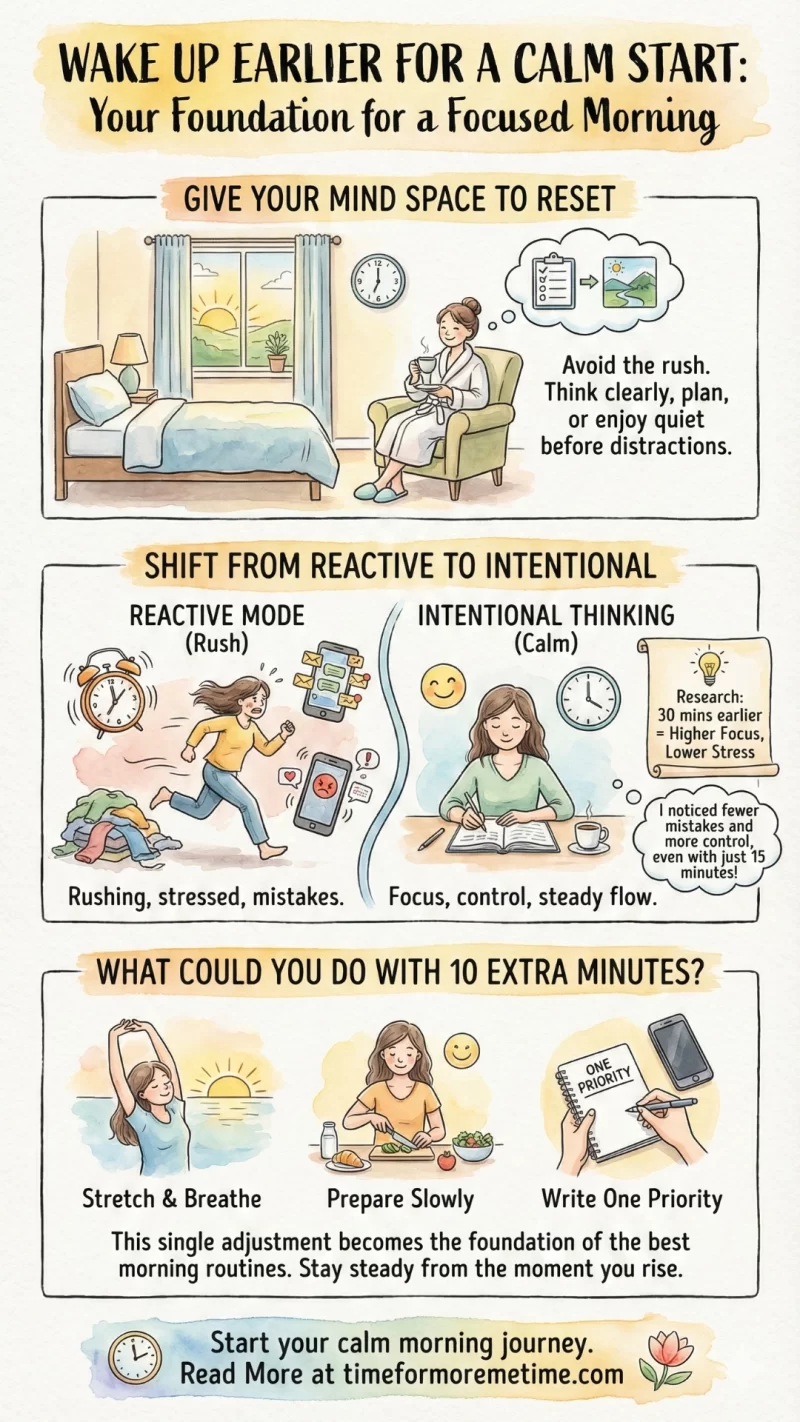
Waking up just a little earlier gives your mind space to reset before the world starts moving. Those extra minutes let you think clearly, plan your day, or simply enjoy quiet before distractions begin. It’s one of the simplest ways to control your energy instead of rushing through it.
Research shows that people who wake up 30 minutes earlier than usual report higher focus and lower stress levels throughout the morning. That calm window helps your brain shift from reactive mode to intentional thinking. When I started waking up earlier, even by fifteen minutes, I noticed fewer mistakes at work and a stronger sense of control over my day.
Try asking yourself what you could do with ten extra minutes of stillness. You might stretch, prepare breakfast slowly, or write down one priority before checking your phone. This single adjustment often becomes the foundation of the best morning routines for productivity, helping you stay steady from the moment you rise.
2. Set Intentions Before Distractions Begin
Before messages or alerts pull your focus, take a few quiet minutes to decide how you want to think and act today. Setting an intention tells your brain what to prioritize, helping you stay calm and purposeful throughout the morning. I do this before checking my phone, and it helped me start the day with direction instead of distraction.
Experts found that people who practiced daily affirmations tied to real goals reported better mood stability and productivity. Repetition strengthens focus, which is why setting intentions works best when done consistently. If you’ve been wondering how to have a good mindset in the morning, this is one of the most reliable ways to build it.
Spend three to five minutes choosing one phrase or word that captures your focus for the day. Here are some good words to start with: steady, grateful, or focused. This small act guides your energy before the world competes for it and sets the mental tone you’ll carry forward.
3. Feed Your Mind With Positive Input
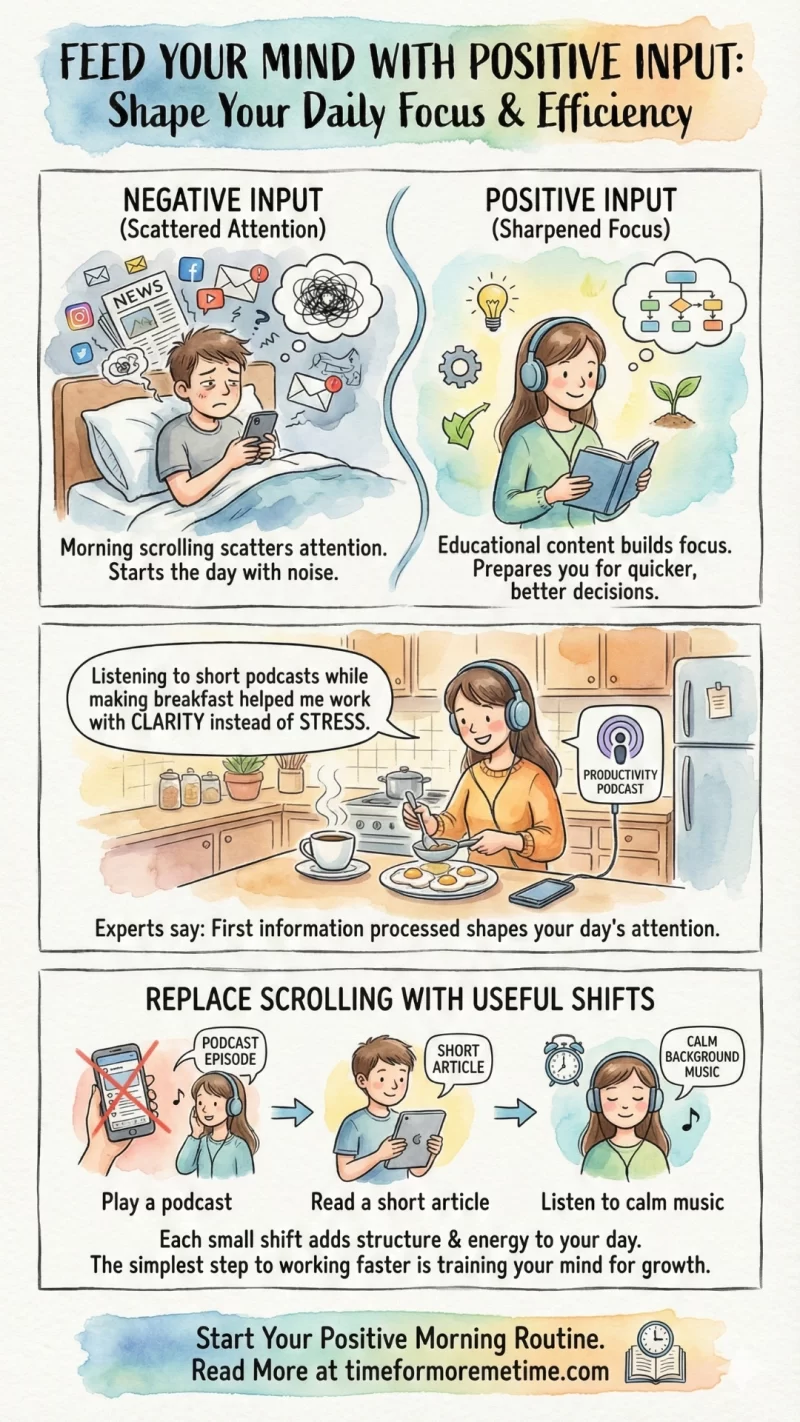
What you expose your mind to in the morning shapes how efficiently you think throughout the day. Choosing positive or educational content builds focus and motivation before distractions begin. When I started listening to short productivity podcasts while making breakfast, I was able to work with clarity instead of stress.
Experts say that the first information you process after waking can either sharpen or scatter your attention. Feeding your brain something constructive prepares you to make quicker, better decisions once work starts. If you’ve ever wanted to learn how to work faster, the simplest step is to train your mind with material that encourages focus and growth.
Replace morning scrolling with something useful. Play a podcast episode, read a short article, or listen to calm background music. Each small shift in your mental input adds structure and energy to the rest of your day.
4. Do A Quick Mental Reset
A brief mental reset clears space for focus before the day starts. Taking a minute to pause and breathe helps your brain shift from rest to readiness. As I sit quietly each morning before checking my phone, my thoughts feel more organized than scattered.
Short mindfulness breaks reduce stress and improve working memory. This brief pause gives your mind a clean slate, preventing yesterday’s leftover thoughts from clouding your decisions. That clarity helps you respond thoughtfully instead of rushing into tasks.
Sit still for sixty seconds and take three deep breaths. As you exhale, imagine releasing unfinished worries. This quick reset grounds your thinking and helps you begin the day feeling steady and alert.
5. Build A Morning Mindset System
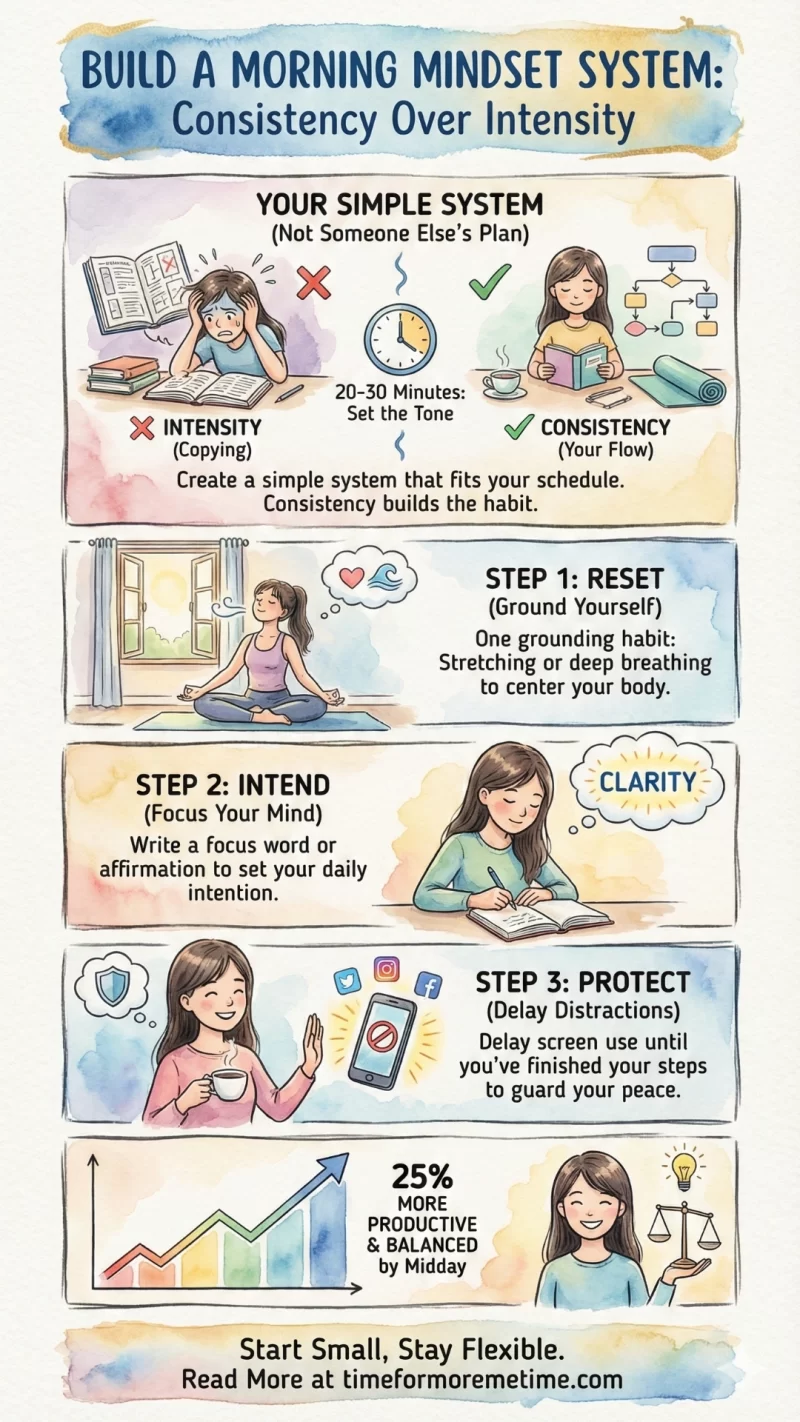
A strong mindset develops through consistency and not intensity. Instead of copying someone else’s plan, create a simple system that fits your schedule. Many people ask how long a morning routine should take. For me, 20 to 30 minutes is usually enough to set the right tone for the day.
Think of it as three steady actions: Reset, Intend, and Protect. Reset with one grounding habit, such as stretching or deep breathing. Intend by writing a focus word or affirmation. Protect by delaying screen use until you’ve finished your steps. Many people who keep structured morning routines say they feel up to 25% more productive and emotionally balanced by midday.
If staying consistent feels challenging at first, start small and adjust as you go. After a few weeks, the process begins to feel automatic. This system works because it blends structure with flexibility, helping you face each morning with clarity and control.
Conclusion
A calm morning mindset begins with small, repeatable habits that shape your focus and energy. Each intentional action—stretching, reflecting, or planning—builds clarity that lasts through the day.
To get more practical tips on building better mornings and stronger routines, subscribe to our blog, follow us on social media, and visit our YouTube channel for simple, actionable guides.
Source
- Photo: Pexels: Gül Işık