


Living alone as a student brings independence—but also real challenges. From budgeting to self-care, it’s easy to feel overwhelmed when doing it solo for the first time. In this post, I’ll share practical tips to help you thrive on your own—ensuring you stay organized, safe, and well-balanced. Let’s get started!
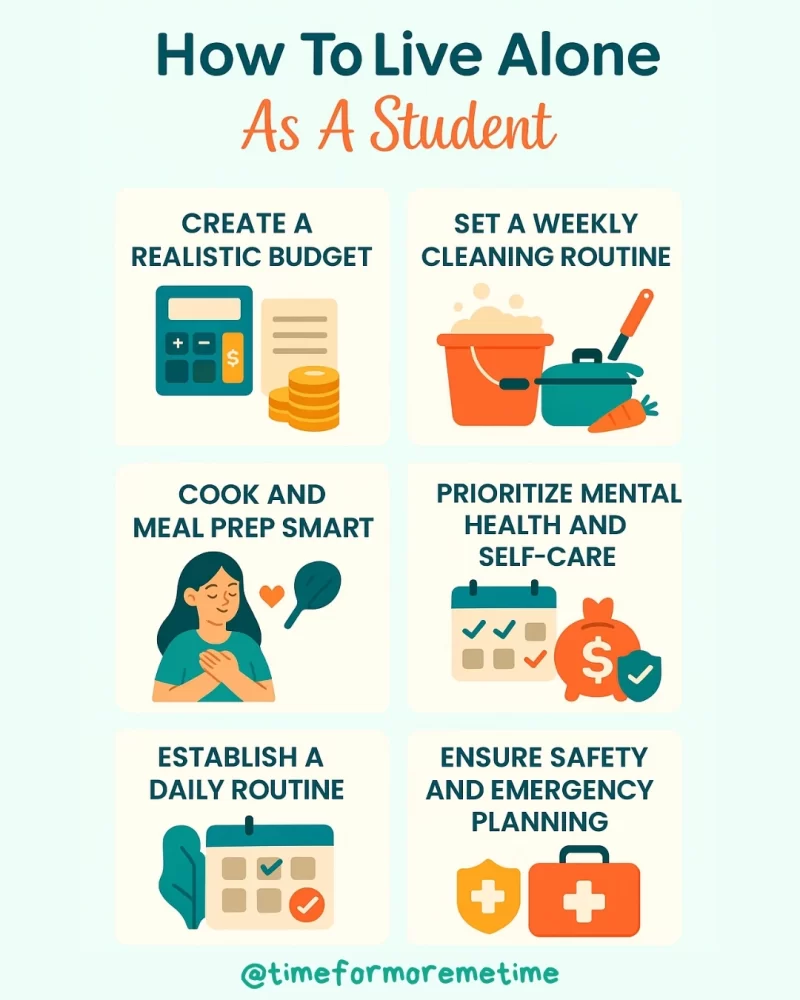
1. Create A Realistic Budget
Creating a realistic budget is the first step to living alone successfully as a student. Start by listing your fixed expenses—like rent, utilities, and groceries—then estimate variable costs like entertainment, school supplies, or transportation. Use apps or spreadsheets to track spending and adjust each month based on your actual habits.
If your expenses exceed your income, consider exploring side hustle ideas such as tutoring, delivery gigs, or freelancing to bridge the gap. Budgeting isn’t about restriction—it’s about clarity. Knowing exactly where your money goes helps you make smarter choices and avoid running out before the month ends. Financial awareness equals freedom.
2. Set A Weekly Cleaning Routine
Keeping your space clean as a student living alone isn’t just about appearances—it’s about creating a calm, functional environment, with research involving 3,066 participants linking cleaning to lower anxiety. A weekly cleaning routine helps avoid buildup, maintain hygiene, and keep chores from piling up.
Break tasks into manageable chunks: for example, clean the bathroom on Mondays, do laundry midweek, and vacuum or sweep on weekends.
You don’t need to do it all at once. Use efficiency tips like setting timers or using checklists to stay focused and make cleaning quicker. A tidy space can boost your mood, improve focus, and make daily life more manageable—especially during busy school weeks.
3. Cook And Meal Prep Smart
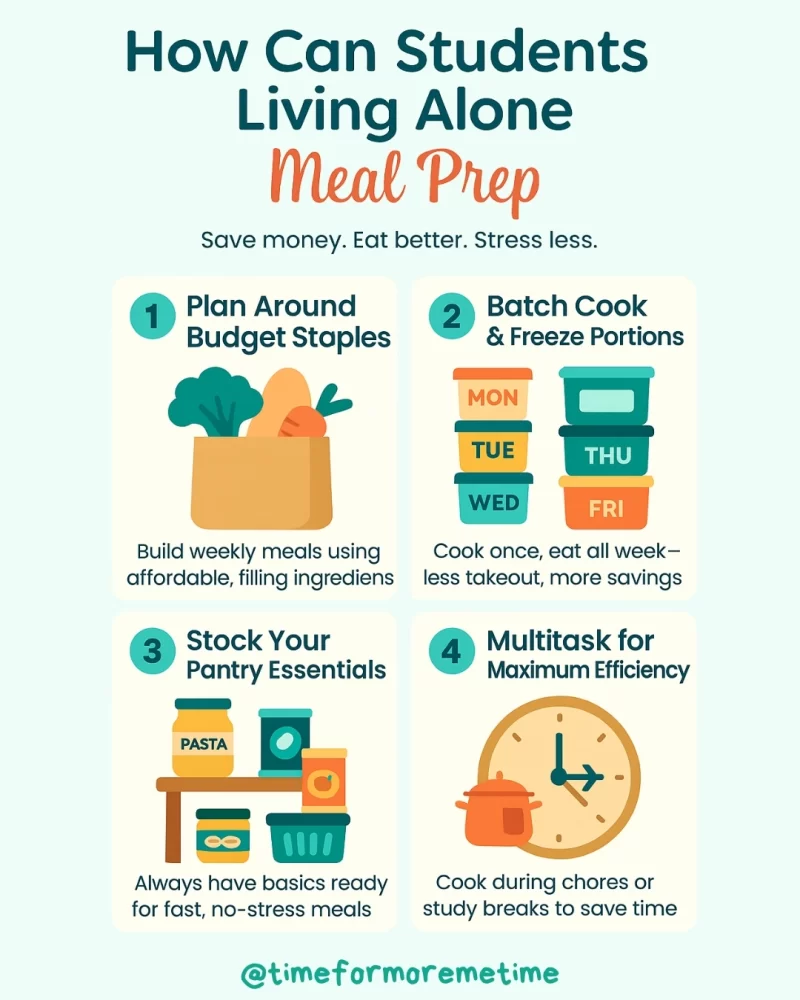
Cooking and meal prepping smartly can save you time, money, and stress when living alone as a student, with home-prepared meals costing about $12 less than inexpensive restaurant meals. Instead of relying on expensive takeout or instant meals, plan your weekly menu around affordable, nutritious ingredients. Batch-cook staples like rice, pasta, or stir-fry to use throughout the week.
Use simple productivity hacks like prepping ingredients in advance, freezing leftovers, or cooking while doing laundry to maximize your time. Keep your pantry stocked with versatile basics like canned beans, pasta, and spices so you can whip up meals without last-minute shopping. Meal prepping not only supports your budget—it also keeps you energized for classes, work, and everything in between.
4. Prioritize Mental Health And Self-Care
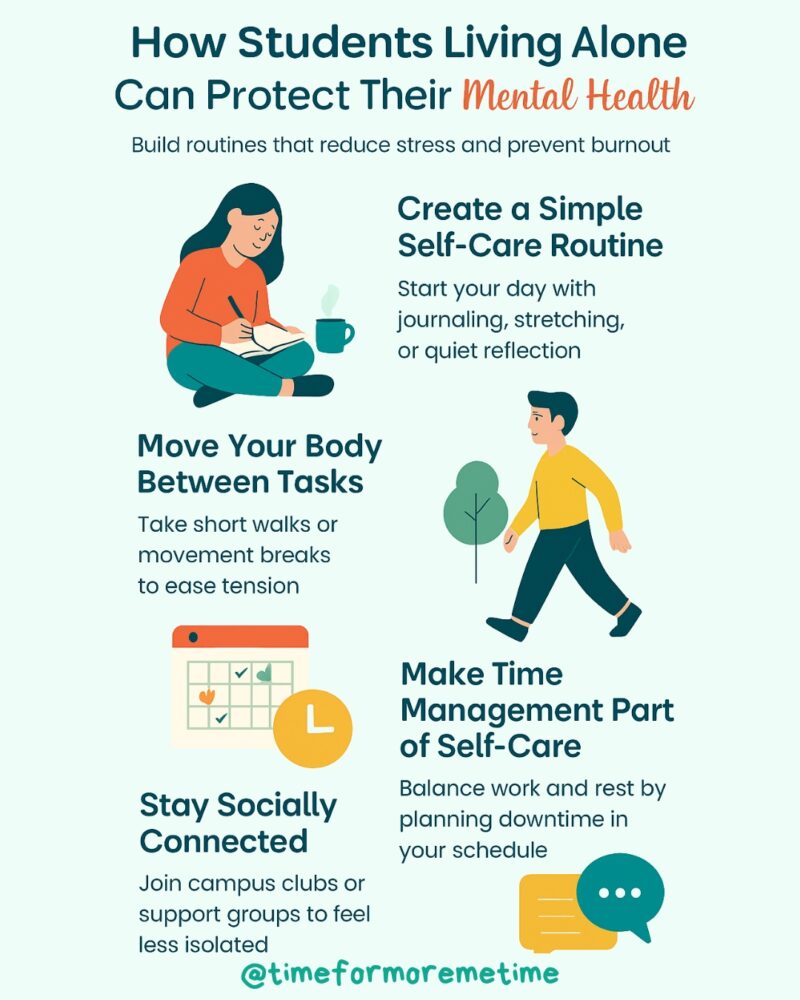
Living alone as a student can be both exciting and overwhelming. Without roommates or family around, it’s easy to feel isolated—especially during stressful times like exams or deadlines. That’s why it’s crucial to build in habits that support your mental health and emotional well-being.
Start with simple routines like journaling in the morning, taking short walks between classes, or setting aside time to unwind in the evening. When you manage your time well, you create space for rest without falling behind—making time management a quiet form of self-care.
Staying connected with others, whether through campus clubs or support services, helps you feel grounded and less alone. That connection matters, as a study of 1,147 university students linked campus participation with stronger support, belonging, and life satisfaction.
5. Establish A Daily Routine
When you live alone, the freedom can feel empowering—but without structure, your days can quickly become disorganized or overwhelming. That’s why establishing a steady daily routine is one of the best things you can do for your well-being and academic success.
Start by setting consistent times for waking up, eating, studying, and relaxing. This rhythm helps your body and mind stay grounded, even during busy weeks.
As part of your routine, gradually build in strong management skills, like planning tasks ahead or using a calendar to stay on track. These habits don’t just keep you organized—they reduce stress and help you feel more in control of your time and energy.
6. Ensure Safety And Emergency Planning
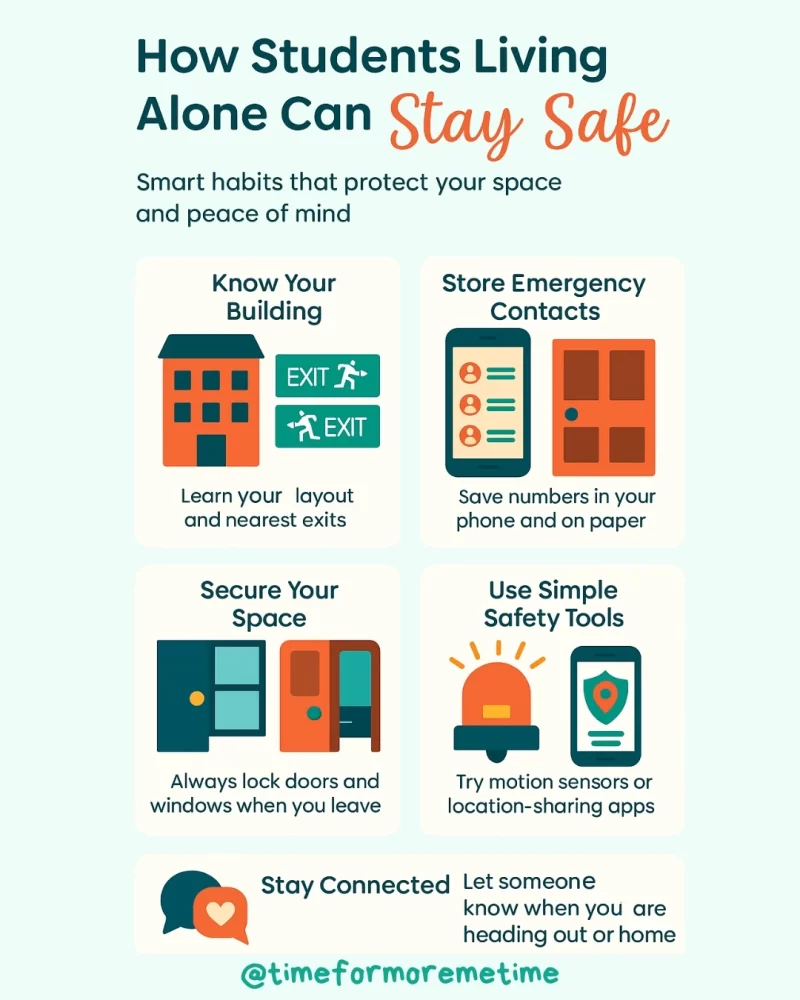
When you’re living alone, feeling safe in your space is just as important as paying rent or doing well in class. It’s easy to overlook safety until something happens—but taking small steps early can make a big difference. Begin by familiarizing yourself with your building’s layout, identifying emergency exits, and storing key contacts in both your phone and a visible location.
From there, make safety part of your everyday routine. Lock doors and windows whenever you leave, and consider simple life hacks like motion-sensor lights or safety apps that let close friends know you’re okay. These habits won’t just protect you—they’ll help you feel more secure and confident living on your own.
Conclusion
Living alone as a student comes with challenges, but with the right habits, it can also be deeply rewarding. By building routines, managing your time and space wisely, and prioritizing both safety and self-care, you create a foundation for independence that supports your academic and personal growth.
If this guide helped you feel more prepared, subscribe to our blog, follow us on social media, and check out our YouTube channel for more student life tips and resources.
Sources
- Photo: Pexels: Mart Production